2026/7/6 11:11:00
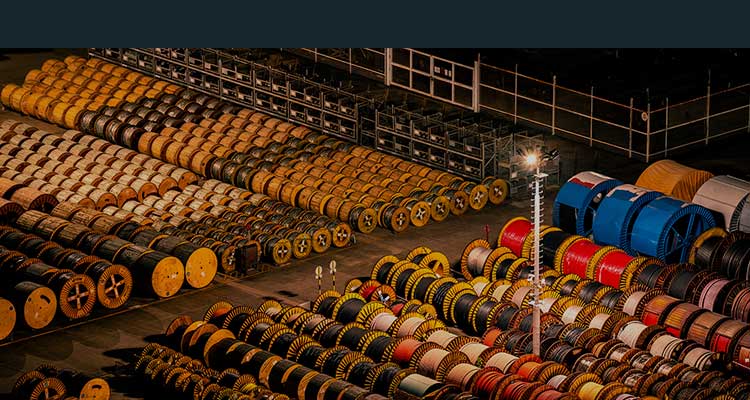
At the beginning of the 2000s, the global internet economy drove a major wave of investment in telecommunications, data infrastructure, power networks and underground utility systems. During that period, large volumes of undersea cables, underground power cables, data centre feeders, industrial control cables and distribution networks were installed to support the rapid growth of digital connectivity.
More than two decades later, many of these systems are entering a new stage of their service life. This does not mean every cable installed around 2000 will fail at the same time. In real engineering projects, cable life depends on design, installation quality, load conditions, soil conditions, water exposure, mechanical protection, temperature, maintenance and operating environment.
However, one fact is clear: many infrastructure owners are now reviewing cable systems that have been operating for 20 to 25 years. The discussion is not only about replacement. It is about whether the original cable design is still suitable for today’s power load, safety requirements, data traffic and reliability expectations.
International organisations have also placed more attention on cable resilience. The International Telecommunication Union has highlighted the importance of submarine cable resilience, while industry analysis from TeleGeography notes that cable replacement and new investment are becoming important drivers for future network planning.
For BuryCable, this creates a practical engineering question: when old undersea, underground or industrial cable systems are upgraded, should the project simply replace old cables with similar products, or should the cable design be improved for the next 25 years?
Many cables installed in the early 2000s were designed for the conditions of that period. Power demand was lower, data centres were smaller, renewable energy was less developed, and many industrial facilities had simpler automation systems.
Today, infrastructure requirements are very different.
Data centres require more reliable power distribution. Industrial plants require better control and signal integrity. Utility networks require higher load capacity and improved fault tolerance. Public buildings and transport systems increasingly require low smoke, zero halogen and fire-resistant cable designs. Underground routes are often more crowded, and replacement work is more complex because existing cable ducts, civil works and operational facilities must remain in service.
This is why modern cable upgrade projects should not be treated as simple product replacement. They should be treated as infrastructure improvement projects.
For example, an old PVC sheathed armoured power cable may still be replaceable with a similar type of cable in some outdoor or industrial applications. But for public buildings, tunnels, data centres, hospitals or transport infrastructure, a low smoke zero halogen option may be more suitable. In British Standard projects, this often means comparing BS 5467 and BS 6724 cable designs. BuryCable has prepared a practical BS 5467 vs BS 6724 cable guide to help project teams understand the difference.
When a cable system has been operating for more than two decades, the visible problem may not be the full problem. A cable can look acceptable from the outside but still have internal ageing, insulation degradation or moisture-related risks.
Common issues include:
· Insulation ageing caused by long-term thermal stress.
· Water ingress through damaged sheath or joints.
· Mechanical damage from soil movement, vibration or external impact.
· Corrosion risk in aggressive underground or petrochemical environments.
· Reduced performance caused by overload or changed operating conditions.
· Higher fault risk at joints, terminations and transition points.
· Limited spare cable availability for old cable designs.
In data and control systems, ageing can also create signal problems. Cable shielding, grounding and electromagnetic interference control become more important when facilities add more variable frequency drives, automation systems, monitoring devices and high-power equipment. For this reason, industrial projects should also review control and instrumentation cable design, not only main power cables.
BuryCable’s SCADA cable selection guide explains how cable screening, installation environment and interference risks should be considered in industrial and utility projects.
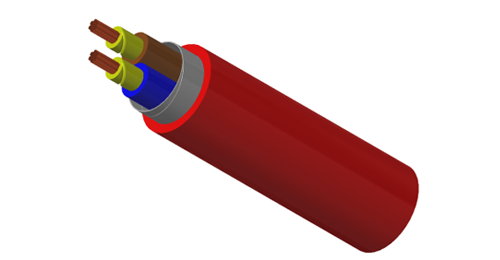
A successful upgrade project usually starts with a cable schedule review. The project team should confirm the original cable type, voltage rating, conductor material, armour type, sheath material, installation method, route length, operating temperature, short circuit requirement and applicable standard.
For underground power distribution, many projects will consider BuryCable armoured cable solutions because armoured cables provide mechanical protection for direct burial, ducts, industrial plants and outdoor installations.
For medium voltage feeders, substations, renewable energy projects and power distribution networks, project teams may need to review BuryCable medium voltage cable range according to IEC 60502 or other applicable project standards. Medium voltage upgrades require careful attention to conductor size, insulation system, metallic screen, armour, sheath material, bending radius, termination design and testing requirements.
For utility and grid-related applications, BuryCable power network cable solutions can support power distribution, transmission-related infrastructure and underground cable replacement requirements.
For data centres, the upgrade challenge is different. The cable system must support high reliability, fire safety, low smoke performance and continuous power availability. In this type of project, BuryCable data centre cable solutions can be considered together with LSZH power cables, fire performance cables, control cables and data transmission cables.
For oil, gas, petrochemical and wet industrial environments, lead covered armoured cable may still be required where moisture barrier performance and chemical resistance are important. BuryCable’s lead covered armoured cable guide provides a useful reference for these demanding environments.
Before selecting a replacement cable, the project owner should avoid starting with price only. The better approach is to review the actual operating and installation conditions.
The first step is to identify the existing cable. This includes voltage, number of cores, conductor size, conductor material, insulation, bedding, armour, sheath and standard. If the original markings are no longer visible, the project team may need to review drawings, maintenance records or cable schedules.
The second step is to check whether the operating load has changed. Many facilities are now using more electrical equipment than they did 20 years ago. A cable that was suitable in 2001 may not provide enough margin for 2026 and beyond.
The third step is to review the installation environment. Is the cable installed underground, in ducts, on trays, in tunnels, near water, near chemicals, near high-temperature areas or in public-access buildings? Each condition may affect cable structure.
The fourth step is to confirm the safety requirement. For some projects, PVC cable may still be acceptable. For others, LSZH, flame retardant, fire resistant or low toxicity materials may be required.
The fifth step is to consider future maintenance. Replacement cables should be selected not only for today’s installation but also for easier maintenance, reliable spare supply and better documentation in future years.
BuryCable supports customers not only by supplying cables, but also by helping review cable requirements at the early stage of a project.
For upgrade and replacement projects, customers can send us the existing cable schedule, old specification, drawings, photos of cable markings, installation environment and required delivery destination. Based on this information, BuryCable can help review possible cable structures, standards and suitable alternatives.
Our support can include:
· Reviewing old cable descriptions and identifying equivalent modern cable types.
· Comparing PVC, LSZH, armoured and unarmoured cable options.
· Checking whether BS, IEC, EN or project-specific standards may apply.
· Recommending suitable cable structures for underground, industrial, utility or data centre applications.
· Supporting project teams with technical datasheets, cable parameters and quotation preparation.
For many replacement projects, the challenge is not only manufacturing a cable. The real challenge is converting an old, incomplete or local specification into a clear modern cable structure that can be quoted, produced and delivered reliably.
This is where BuryCable can provide practical value.