2026/3/24 11:35:16
Technical Guide for Power Cable Selection
Armoured vs Unarmoured Cable: When to Use Which
Choosing the right power cable is not only about voltage, conductor size, or insulation type. In many projects, one of the most important decisions is whether to use an armoured cable or an unarmoured cable. This choice directly affects cable protection, installation method, service life, and overall project reliability.
For engineers, contractors, and buyers, understanding the difference between these two structures helps ensure the selected cable matches the real operating environment. Using the wrong type can lead to unnecessary cost, installation issues, or even cable damage during service.
Cable Type | Best For | Protection | Cost Level |
Armoured | Buried, outdoor and harsh routes | High | Higher |
Unarmoured | Protected trays, ducts and indoor routes | Moderate | Lower |
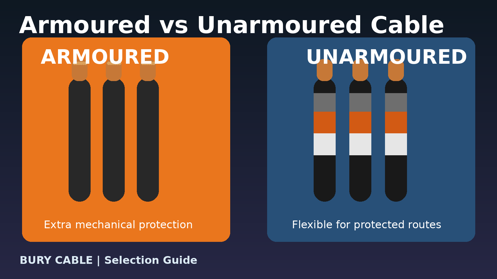
An armoured cable includes an additional protective layer designed to provide mechanical protection. This armour helps protect the cable from impact, compression, pulling stress, and external damage during installation or operation.
· Common armour types: steel wire armour (SWA), steel tape armour (STA), and aluminum wire armour (AWA).
· Typical use: direct burial, outdoor exposure, industrial sites, tunnels, infrastructure routes and other harsh environments.
An unarmoured cable does not include a metallic armour layer. It usually contains conductor, insulation, fillers or bedding as required, and an outer sheath, but without the extra mechanical protection of steel or aluminum armour.
· Advantages: lighter weight, easier handling, higher flexibility and lower cost.
· Typical use: cable trays, ducts, electrical rooms and other protected installations with low risk of physical damage.
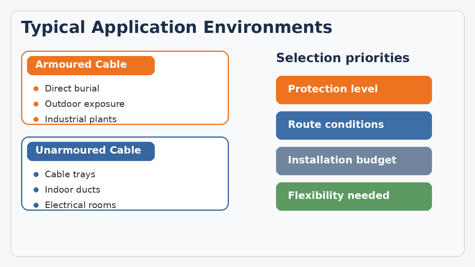
Figure 1. Typical environments and selection priorities for armoured and unarmoured cable.
Feature | Armoured Cable | Unarmoured Cable |
Mechanical protection | High resistance to impact, crushing and external stress | Moderate to low; relies on sheath and route protection |
Installation environment | Outdoor, buried and harsh industrial locations | Indoor, tray, duct and protected routes |
Weight & flexibility | Heavier and less flexible | Lighter and easier to handle |
Installation difficulty | Higher due to weight and bending constraints | Easier in confined spaces and complex layouts |
Cost | Higher due to extra materials and construction | Lower where armour is not required |
· Direct buried cable systems and exposed outdoor routes
· Industrial plants, petrochemical facilities and infrastructure projects
· Areas with higher risk of impact, crushing or accidental damage
· Installations where long-term mechanical reliability is a priority
· Indoor cable tray systems and protected ducts
· Electrical rooms, switch rooms and commercial buildings
· Controlled industrial environments with low mechanical risk
· Projects where flexibility, easier installation and lower cost are preferred
SWA is often selected where stronger mechanical protection and improved tensile performance are needed, especially in power distribution and outdoor installations. STA is commonly used where protective coverage is required but where cable construction or application conditions make tape armour more appropriate.
In many IEC 60502 power cable projects, the armouring decision must be evaluated together with voltage rating, sheath type, environmental conditions and installation method. A cable installed underground or in an exposed industrial location may require armour, while a cable installed inside a protected tray system in a building may not.
· Installation method and route conditions
· Risk of mechanical damage and environmental exposure
· Indoor or outdoor use, buried or above-ground routing
· Required flexibility, budget and local project specifications
At BURY CABLE, we provide power cable solutions for industrial, commercial and infrastructure applications. Our team supports customers with technical advice, product selection and quotation service for both armoured and unarmoured cable requirements.
Request a Quote or Technical Advice Website: www.burycable.com | WhatsApp: +86 13573161081 Share your voltage level, installation method and route environment for a faster recommendation. |
The choice between armoured and unarmoured cable depends on where and how the cable will be installed. Armoured cable provides stronger mechanical protection and is often preferred in harsh, exposed or buried environments. Unarmoured cable offers lighter weight, easier handling and lower cost for protected installations. Understanding these differences helps reduce installation risk, improve service life and support better overall project performance.