2025/11/28 14:47:35
Impact of AI Industry Development on the Global Cable Sector — Focusing on EU, UK, and IEC Cable Standards
1. Introduction
The rapid development of artificial intelligence (AI) has accelerated global digital transformation. Whether in hyperscale data centers, cloud computing clusters, edge computing nodes, or intelligent industrial systems, the foundation of AI depends on stable electrical power and high‑performance data transmission. Cables, as the essential medium for supplying energy and carrying information, therefore play an increasingly critical role. The rise of AI also drives new demands in safety, bandwidth, thermal resistance, materials, and system standards.
This article systematically analyzes how AI development affects the cable industry, with a particular focus on the EU standard system (EN/HD/BS EN), the UK standard system (BS), and the globally applied IEC standards. It explains the technical characteristics of these standards and compares their suitability in AI‑era applications such as data centers, automated factories, and global cloud networks.
2. AI Industry Trends and Their Impact on Cable Requirements
2.1 Rising Power Density in AI Data Centers
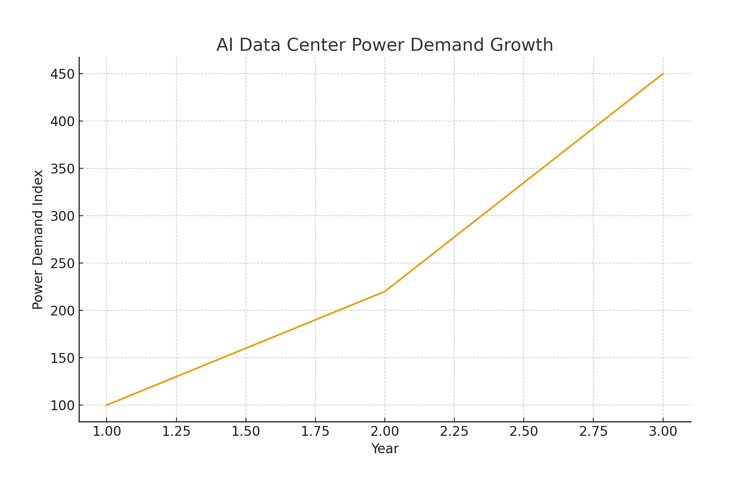
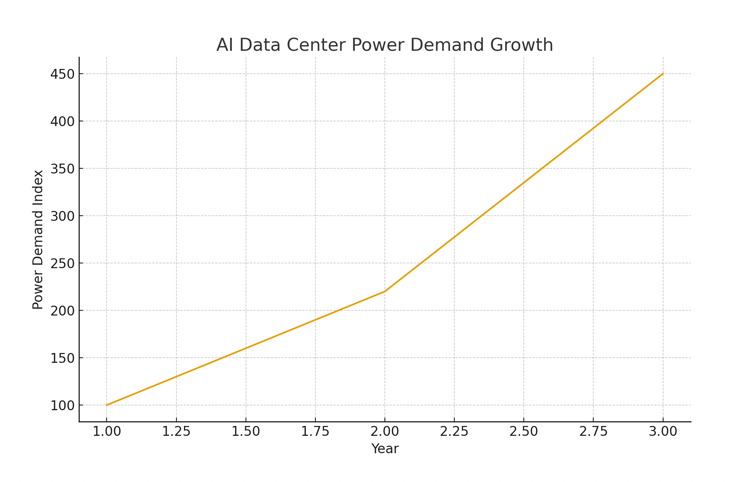
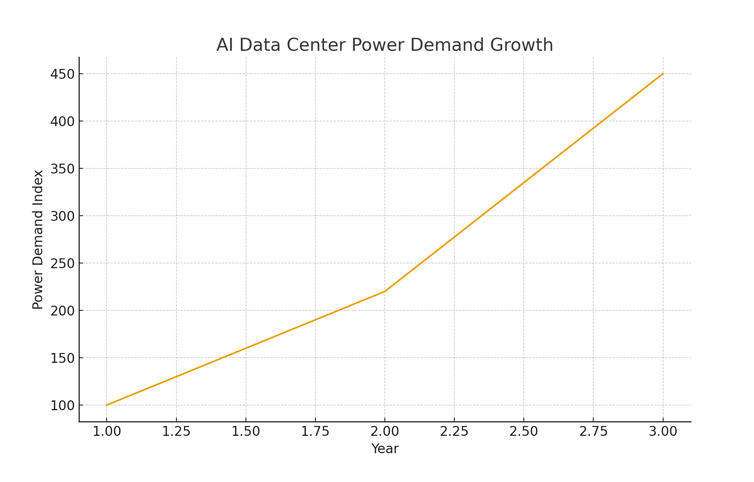
AI training clusters commonly use GPUs, NPUs, and high‑performance accelerators. Modern AI racks now operate at power densities of 20–40 kW, and extreme cases exceed 50 kW per rack. This expansion creates substantial demands for:
• Higher current‑carrying capacity
• Improved heat dissipation
• Higher temperature‑rated insulation materials
• Lower energy losses and higher operational reliability
2.2 Expansion of Edge Computing
Edge computing for smart manufacturing, autonomous driving, and IoT requires flexible, durable cables with:
• Smaller diameters
• Low‑smoke, halogen‑free (LSZH) insulation
• Strong shielding against electromagnetic interference
• High‑speed data transmission performance
2.3 Increasing Electromagnetic Interference (EMI)
AI computing hardware generates high‑frequency noise, which impacts both communication cables and power cables. Stronger shielding (F/FTP, S/FTP), improved grounding structures, and enhanced EMC standards are becoming essential.
2.4 AI‑Driven Smart Manufacturing
AI adoption in industrial automation introduces requirements for:
• Highly flexible robotic cables
• Tens of millions of bending cycles
• Oil‑resistant, chemical‑resistant outer jackets
• Superior abrasion resistance
• Stronger fire safety performance
3. EU Cable Standards (EN/HD/BS EN) and Their Advantages in AI Applications
The European Union maintains some of the world’s most rigorous regulations for safety, environmental protection, and fire resistance. Cable types such as N2XH, N2XY, NHXH, NHXCH, and BS EN 50525 series are widely used.
Key Advantages:
• Strong emphasis on CPR (Construction Products Regulation) fire behavior classifications such as B2ca and Cca
• Mature adoption of LSZH materials
• Excellent fire safety, smoke suppression, and low toxicity
• Broad acceptance in high‑safety AI data centers and smart buildings
EU Standards Are Recommended For:
• European AI data center projects
• Environments requiring strict CPR compliance
• AI infrastructure that prioritizes low‑smoke, low‑toxicity materials
4. UK Cable Standards (BS) and Their Relevance for AI‑Era Infrastructure
The UK cable standard system is widely recognized for its strong fire‑resistance performance and robust mechanical design. Common standards include BS 5467, BS 6724, BS 6387 (CWZ), BS 7629‑1, and BS 7846.
Key Advantages:
• BS 6387 CWZ fire performance — one of the strongest international fire‑resistant standards
• SWA and LSZH armored cables suitable for harsh mechanical environments
• High stability for main feeders in large AI data centers
• Excellent performance for industrial AI automation, including robotics
UK Standards Are Recommended For:
• AI data centers requiring the highest level of fire safety
• Heavy‑duty industrial environments
• Regions influenced by UK engineering systems (Middle East, Southeast Asia, etc.)
5. IEC Cable Standards: The Global Benchmark for AI Infrastructure
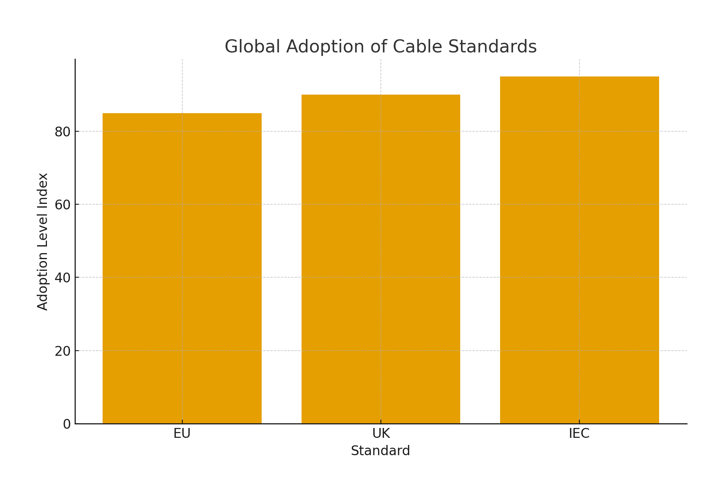
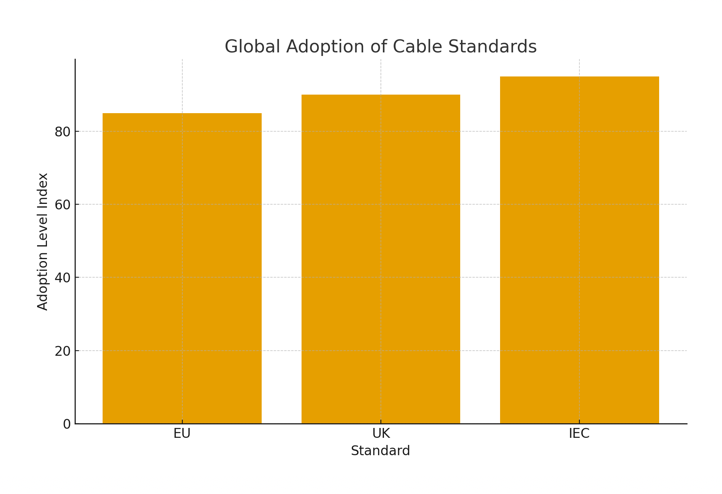
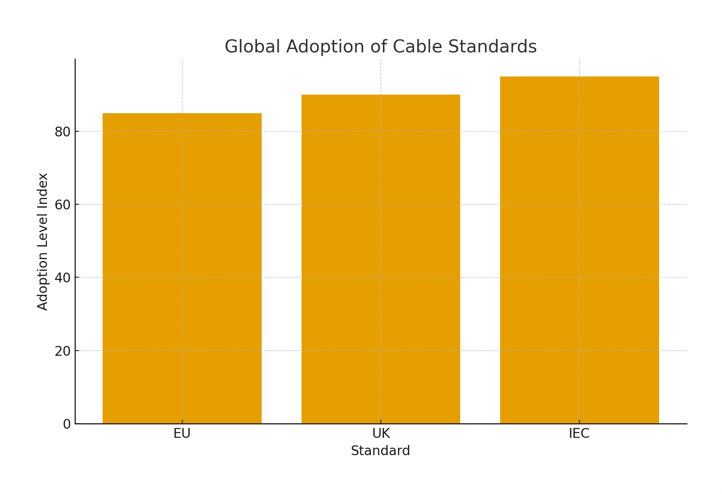
IEC standards remain the most widely used worldwide, enabling consistent deployment of multinational AI infrastructure. Common standards include:
• IEC 60228 for conductor classes
• IEC 60332 for flame resistance
• IEC 60502 for low‑ and medium‑voltage power cables
• IEC 60754 and 61034 for smoke, acidity, and toxicity tests
• IEC 61156 and ISO/IEC 11801 for high‑speed communication cables
Key Advantages:
• Most universal standard system worldwide
• Strong EMC guidelines supporting AI network cables
• Unified requirements for global data center deployments
• Lower procurement cost and easier cross‑border project management
IEC Standards Are Recommended For:
• Global cloud service providers (AWS, Google, Microsoft, etc.)
• Multinational AI production facilities
• Unified procurement across multiple countries
6. New Cable Performance Requirements Brought by AI
6.1 Higher Current‑Carrying Capacity
AI power systems demand:
• XLPE or advanced cross‑linked compounds
• Larger conductor cross‑sections
• Better thermal aging resistance
• Enhanced insulation thermal stability
6.2 Stronger Fire‑Resistance Requirements
AI data centers and industrial automation sites require compliance with:
• EU CPR B2ca/Cca fire behavior classes
• UK BS 6387 CWZ high performance fire resistance
• IEC 60332‑3 flame retardance
• IEC 60754 and 61034 smoke/toxicity limits
6.3 Higher‑Speed Data Transmission
AI clusters depend on 100G/200G/400G networks, demanding:
• IEC 61156‑7 (Cat.7A), IEC 61156‑9 (Cat.8)
• High‑density shielding structures
• Lower insertion loss and crosstalk
• Improved EMC performance
6.4 Reliability and Durability Requirements
Robotic and automation cables require:
• 10 to 20 million bending cycles
• Oil, chemical, UV, and abrasion resistance
• Long service life even in dynamic applications
7. Comparison of EU, UK, and IEC Standards for AI Applications
EU Standard System:
• Best for environmental protection and CPR fire classification
• Ideal for smart buildings and EU‑region AI data centers
UK Standard System:
• Strongest fire‑resistant performance (BS 6387 CWZ)
• Best choice for high‑risk environments and heavy‑duty industrial AI systems
IEC Standard System:
• Most universal and cost‑effective for global deployments
• Strong support for high‑speed data transmission standards
8. Future Development of the Cable Industry in the AI Era
8.1 Intelligent Cable Technology
Future cables may include:
• Integrated sensors
• Real‑time monitoring of temperature and load
• AI‑assisted fault prediction
8.2 High‑Performance Insulation and Sheathing Materials
AI power loads will accelerate the development of:
• New cross‑linked materials
• Composite insulation structures
• High thermal‑conductivity materials
8.3 Global Standard Harmonization
As AI infrastructure globalizes, harmonization among EU, UK, and IEC standards will improve deployment efficiency.
8.4 Green Manufacturing and Sustainability
Environmental considerations will promote:
• Wider LSZH adoption
• Renewable materials
• Energy‑efficient production processes
9. Conclusion
AI is reshaping the cable industry across performance, materials, structure, and standards. Understanding the interplay between EU, UK, and IEC cable standards is essential for companies participating in global AI infrastructure development. Manufacturers and engineering contractors that master all three systems will gain significant advantages in the AI era.