2026/3/31 11:58:28
RS485 Cable: Structure, Specifications and Industrial Applications
RS485 cable is a widely used industrial communication cable designed for reliable data transmission over long distances. It uses differential signaling, which enables stable communication in high electromagnetic interference environments, supports multi-device networking, and allows transmission distances up to 1200 meters.
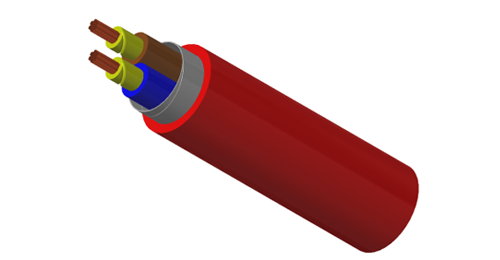
A typical RS485 cable includes the following components:
- Conductor: Bare copper or tinned copper
- Insulation: PE or PVC
- Twisted Pair: Reduces electromagnetic interference
- Shielding: Foil shield, braided shield, or double shielding
- Drain Wire: Used for grounding
- Outer Jacket: PVC (indoor), LSZH (low smoke), or PE (outdoor)
Parameter | Standard Value | Description
Impedance | 120Ω | Critical for signal stability
Transmission Distance | ≤1200m | Depends on baud rate
Data Rate | Up to 10 Mbps | Short distance
Capacitance | ≤50 pF/m | Lower improves performance
Shielding | Single / Double | EMI protection
RS485 cable provides higher interference resistance, longer transmission distance, and better signal stability compared to standard signal cables, making it suitable for industrial environments.
RS485 cables are widely used in:
- Industrial automation (PLC, sensors, drives)
- Building systems (HVAC, lighting control)
- Smart metering (Modbus communication)
- Security systems (CCTV, access control)
- Energy systems (solar, battery management systems)
Selection depends on application environment:
- Indoor: PVC jacket, single shield
- High EMI: Double shield
- Outdoor: PE jacket
- Harsh environment: Armoured cable
Low-quality cables may lead to signal loss, communication failure, and system instability. High-quality RS485 cables ensure stable transmission, reduced interference, and long-term reliability.
RS485 cable is essential for industrial communication systems. Choosing the correct cable structure and shielding ensures reliable performance. BURY CABLE provides engineered RS485 solutions for demanding environments.