2026/10/27 15:13:15
Electricity network upgrades are receiving renewed attention as utilities face connection delays and more demanding operating conditions. The International Energy Agency's report Modernising Grids in the Age of Electricity, published on 21 September 2026, examines how digital technologies can improve the use of existing networks alongside new construction. The report also formed the subject of an IEA webinar scheduled for 26 October.
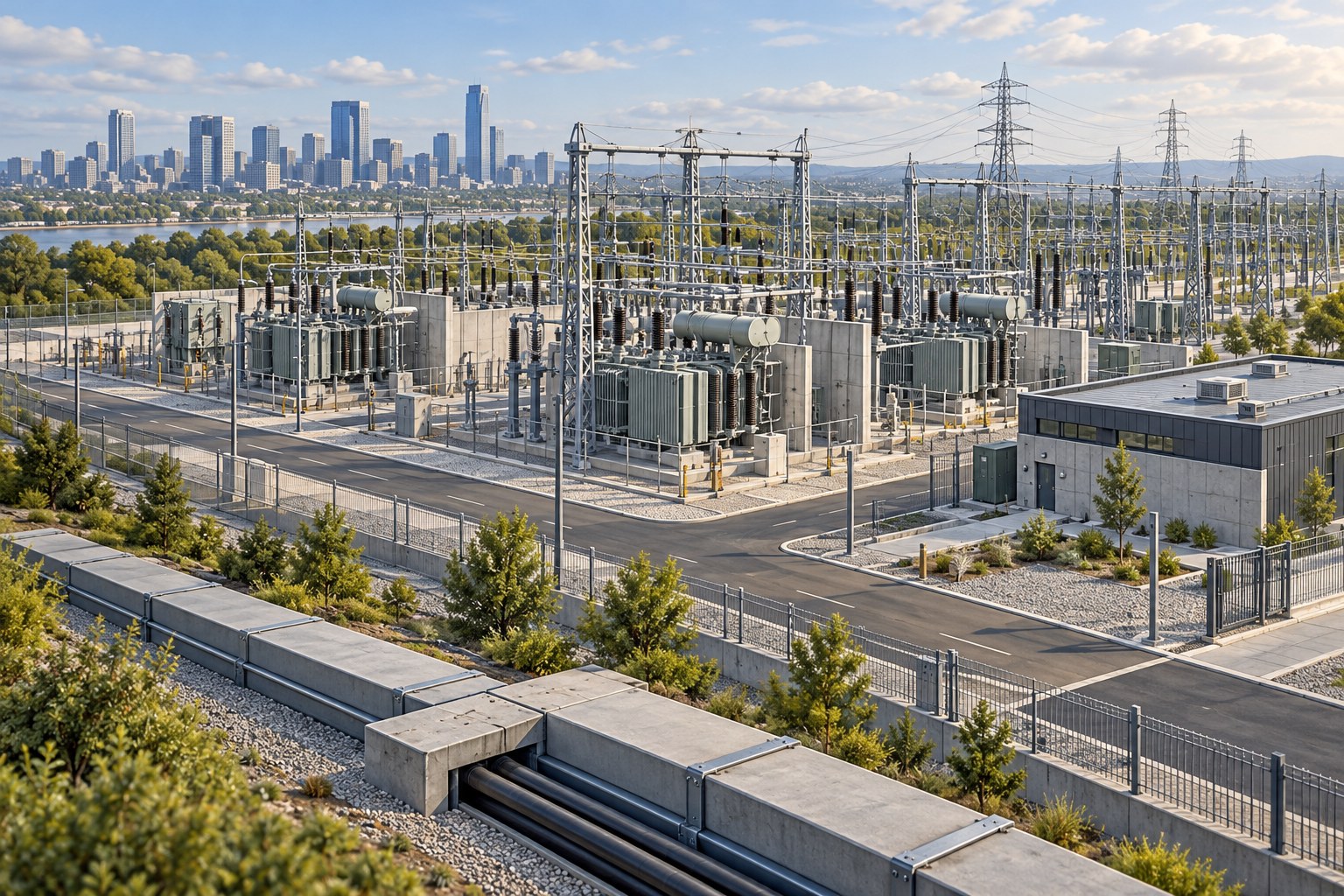
Substation infrastructure brings power distribution, monitoring and control together. Illustration.
The IEA estimates that meeting electricity demand growth through 2035 requires grid capacity to increase by at least 30%, equivalent to adding or replacing 25 million kilometres of lines. It also identifies scope for existing networks to accommodate more connections through dynamic ratings, network reconfiguration and advanced power-flow control.
| Indicator | IEA finding | Scope |
|---|---|---|
| Grid capacity | At least 30% more by 2035 | Required to meet expected electricity demand growth. |
| Renewable connection queue | At least 1,700 GW in 2025 | Advanced-stage renewable projects awaiting connection. |
| Potential additional connections | Up to 330 GW | Generation, storage and demand enabled by three grid-enhancing technologies on existing networks. |
Source: IEA executive summary. The 330 GW figure is an estimated technical opportunity, with results dependent on network and operating conditions. These figures describe electricity systems; they are not forecasts of cable sales or confirmed procurement volumes.
The report identifies sensing, communications and responsive control as foundations of modern grids. Its monitoring and control chapter highlights asset replacement and refurbishment as practical opportunities to incorporate these capabilities. Bringing monitoring into planned renewal work can reduce the need for separate retrofit programmes later.
Distribution networks deserve particular attention because visibility of local operating conditions is often limited. The IEA describes the need to connect feeder, transformer, substation and meter information to operating systems. The value comes from reliable measurements that operators can use to make decisions and control equipment.
For EPC contractors and electrical designers, our reading is that grid modernisation brings several cable systems into the same scope of work. A substation refurbishment may retain some primary equipment while adding protection relays, measurement points or remote-control functions. Each connection needs to be defined against the equipment and route it will serve.
| Cable system | Typical role | Details to resolve |
|---|---|---|
| Power feeders | Supply switchgear, transformers and distribution circuits. | Voltage, conductor rating, fault duty, installation conditions and accessories. |
| Auxiliary and control | Connect station services, interlocks and operating circuits. | AC/DC duty, core identification, termination space and required circuit performance. |
| Instrumentation | Carry measurements between field devices and control equipment. | Signal type, pair construction, screening, segregation and earthing design. |
| Communications | Connect compatible devices and station networks. | Protocol, copper or fibre interface, distance, topology and environmental conditions. |
The table is a project-planning overview. The approved electrical design determines the actual cable selection. Communication interfaces need particular care: an RS485 circuit, an Ethernet link and a fibre connection require different checks. A common route or similar jacket does not make cables interchangeable.
For relevant copper signal circuits, buyers can review our screened instrumentation cable and RS485 databus cable specifications against the equipment requirements. Confirm the specified construction and installation environment before including a product in the cable schedule.
Existing installations can constrain a refurbishment more than the new equipment itself. Before ordering, establish which circuits will remain in service, the available duct and tray space, access for pulling and the permitted outage windows. Record new and retained circuits separately so the installation team can identify the scope without relying on assumptions at site.
A shared interface schedule should connect cable IDs with equipment terminals, glands, connectors and test requirements. Changes to a relay, communication device or terminal arrangement can then be reviewed before cable manufacture and installation. Documentation should also identify the installed routes and test records needed by the operator after handover.
Our EPC cable procurement and installation guide covers the purchasing and site controls in more detail. For a grid or substation package, send BURY CABLE the cable schedule and project specification, together with the destination and required delivery sequence, for technical review and quotation.
IEA, Modernising Grids in the Age of Electricity, 21 September 2026, including its executive summary and monitoring and control chapter. Related IEA webinar programme, 26 October 2026. Industry analysis by BURY CABLE. Published 27 October 2026.