2026/11/9 16:05:59
The International Energy Agency has forecast almost 4,800 gigawatts (GW) of renewable power capacity growth between 2026 and 2031. Published on 6 November, Renewables 2026 puts the expansion 57% above the previous six-year period, with solar photovoltaics accounting for more than three-quarters of the increase.
The outlook also points to a broader geographical spread of investment. India becomes the second-largest growth market after China, while capacity additions in emerging and developing economies outside China are expected to match those in advanced economies for the first time over the forecast period.
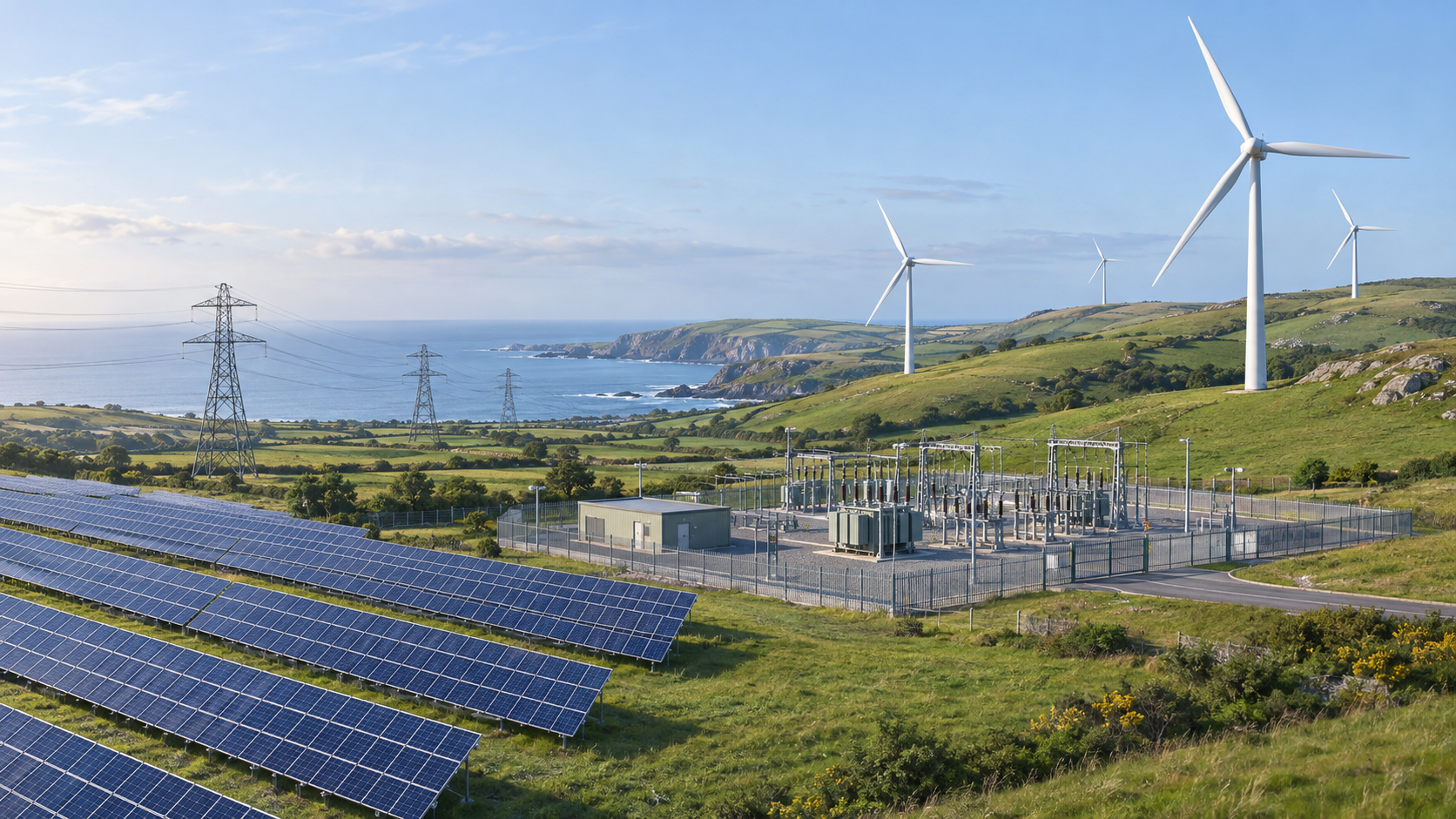
Renewable generation and grid connection infrastructure. Conceptual illustration.
In its accompanying news release, the IEA reports 3,000 GW of advanced-stage renewable energy and storage projects waiting for grid connections. It identifies network investment, faster connections and greater system flexibility as priorities for turning the project pipeline into operating capacity.
| Measure | IEA outlook / finding |
|---|---|
| Renewable capacity growth | Almost 4,800 GW during 2026–2031; 57% more than in 2020–2025. |
| Solar PV contribution | More than three-quarters of forecast global renewable capacity growth. |
| Electricity generation | Renewables reach almost 45% of global generation in 2031, from 33% in 2025. |
| Grid connection queue | 3,000 GW of advanced-stage renewable and storage projects awaiting connections. |
Sources: IEA, Renewables 2026 executive summary and news release, 6 November 2026. Capacity growth, generation share and queued projects are different measures; the queue is not an additional capacity forecast.
BURY CABLE’s procurement perspective is that connection milestones should shape the release of cable packages. A project may have a generation target while its export route, substation interface or energisation date remains under review. Those decisions affect cable lengths, accessories, installation work and delivery sequencing.
For EPC contractors, a useful starting point is a cable schedule divided by circuit function. Solar cables, wind farm and wind turbine cables, medium voltage cables and instrumentation cables serve different parts of a project. A single general description such as “renewable energy cable” leaves too much room for inconsistent quotations.
| Cable package | Information to settle before enquiry |
|---|---|
| Solar PV DC circuits | String layout, system voltage, connector compatibility, outdoor exposure and the intended installation method. |
| Wind farm circuits | Separate turbine equipment requirements from fixed site circuits; identify any movement, torsion and temperature duties. |
| Medium voltage collection | Approved voltage designation, conductor and screen design, route conditions, earthing arrangement, joints and terminations. |
| Control and instrumentation | Signal type, pair or core count, screening, equipment interfaces, segregation and route-specific fire requirements. |
These are enquiry inputs, not a substitute for the project’s electrical design. Cross-section, current-carrying capacity and voltage drop need assessment under the actual installation conditions. Outdoor suitability, water exposure and mechanical duties should be supported by the selected product’s documentation; a feature stated for one cable construction cannot be assumed for every cable in the same family.
Each enquiry should identify the governing specification and required evidence, including the applicable standards and editions, drawings, test documents and any project-specific approvals. Where alternatives are permitted, the quotation should show the proposed construction and deviations explicitly. This gives the engineering team a clear basis for review and helps purchasing avoid comparing different technical scopes as if they were equivalent.
Delivery planning also needs route-level detail. Confirm drum lengths against the installation sequence, available handling equipment and planned joint locations. Record the revision of the cable schedule used for the order, and agree how later quantity changes will be handled. For phased projects, separate firm releases from forecast requirements so manufacturing and site teams work from the same information.
The IEA forecast provides a useful view of where renewable investment may develop. It does not specify cable quantities or purchasing dates for individual schemes. Those remain tied to approved designs, connection arrangements and construction programmes. For a project enquiry, provide BURY CABLE with the cable schedule, installation conditions, required documentation and target delivery stages so the proposed supply scope can be reviewed against the actual project.
IEA: Renewables 2026 — Executive summary
IEA news release, 6 November 2026