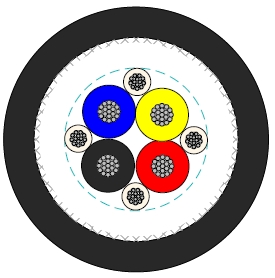
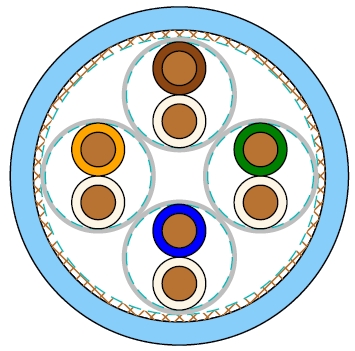
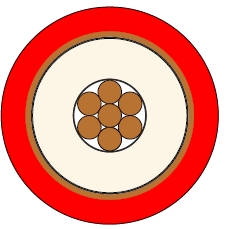
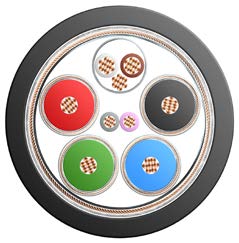
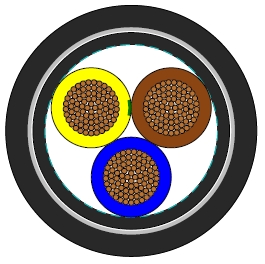
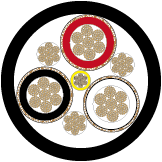
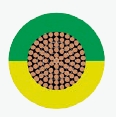
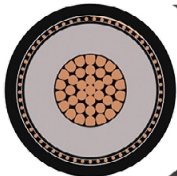
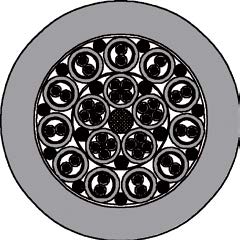
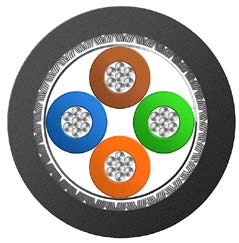
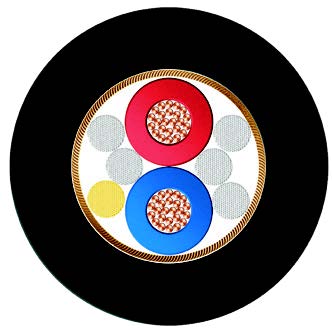
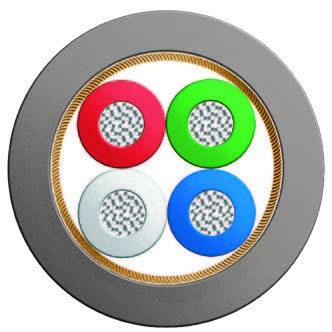
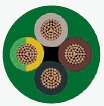
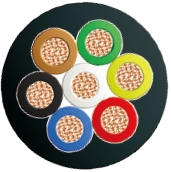
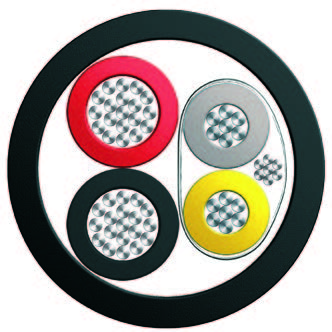
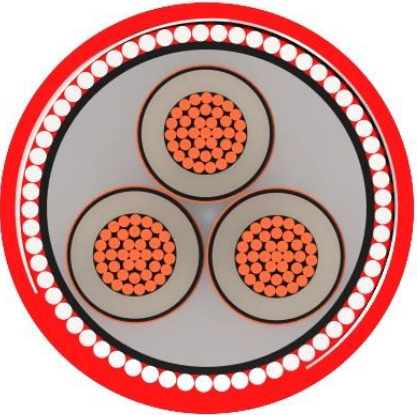
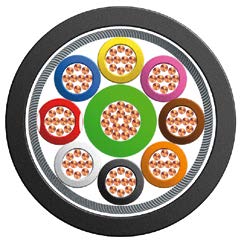
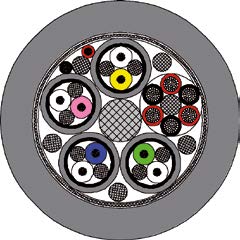
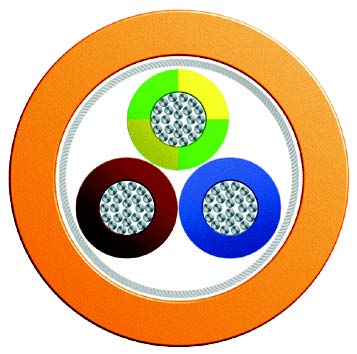
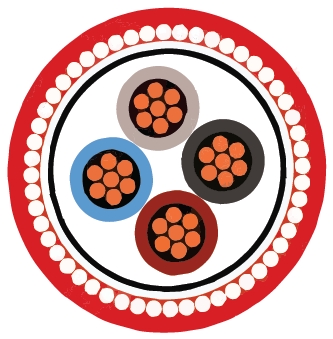
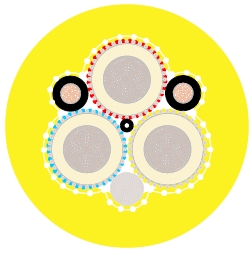
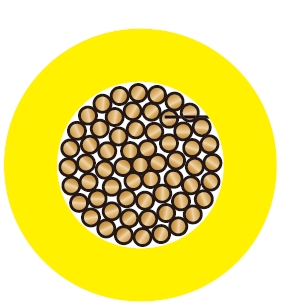
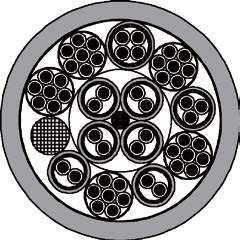
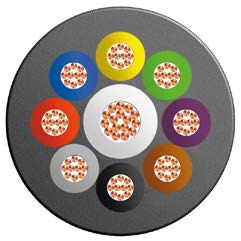
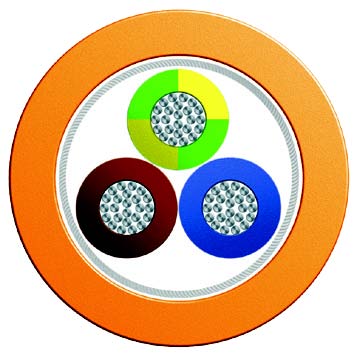
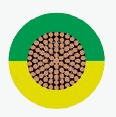
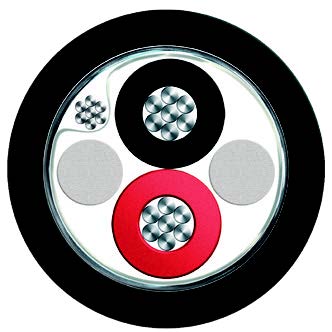
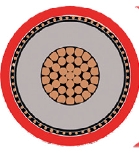
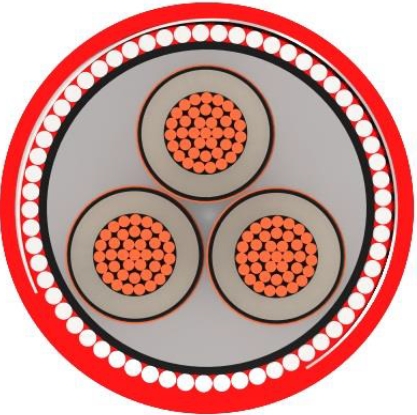
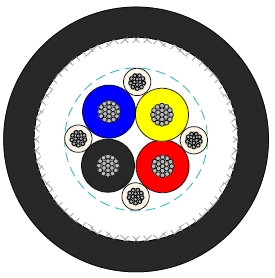
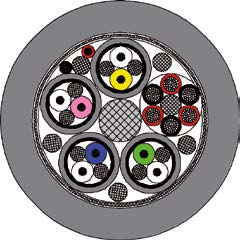
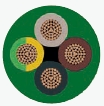
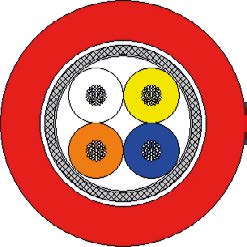
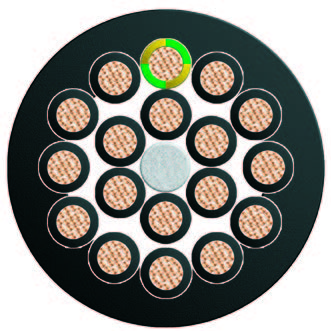
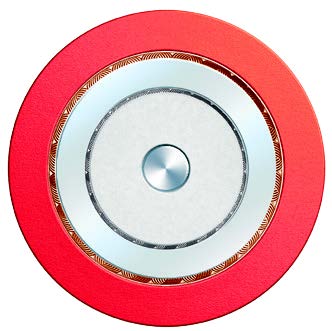
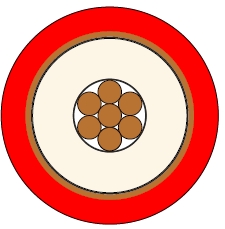
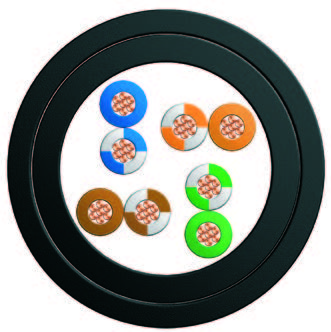
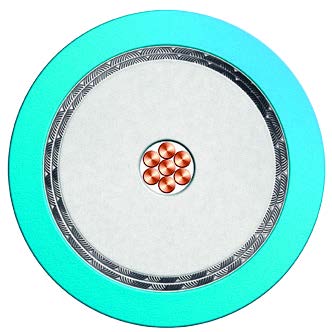
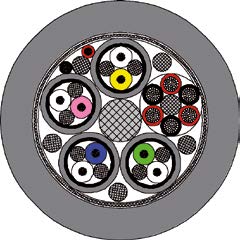
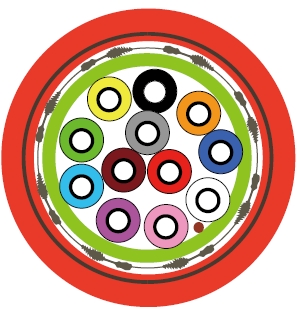
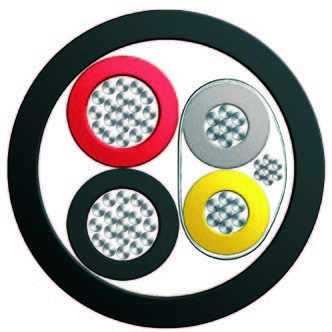
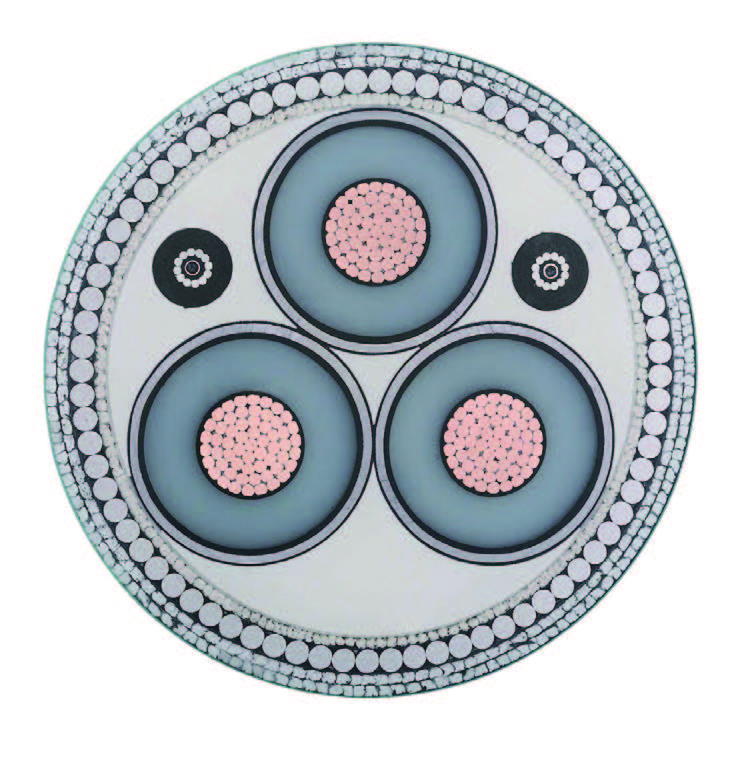
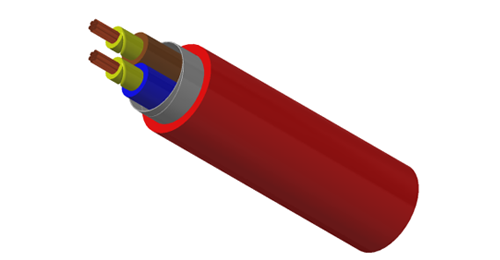
Type D1 and D2 cables provide fixed railway signalling connections where an LSZH outer sheath is required, including specified tunnel and underground routes. Class 2 tinned copper conductors are used throughout the range. The construction lists LSZH or GP4 EPR insulation, so the insulation option should be identified in the order. D1 covers single-core cables and D2 the twin and multicore arrangements in the schedule.
NR/PS/SIG/00005(formerly RT/E/PS/00005)
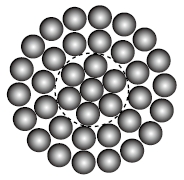
Electrical Characteristics at 20℃Conductors: Tinned stranded copper, according to IEC 60228 class 2& BS 6360.
Insulation: LSZH or EPR Type GP4 to BS 7655.
Core Wrapping: Plastic tape(s) with overlapping.
Sheath: LSZH.
| Nominal Conductor Cross Section | mm | 0.75 | 1.5 | 2.5 | 10.0 | 16.0 | 35.0 | 70.0 | 95 |
| Maximum Conductor DC Resistance | Ω/km | 24.8 | 12.2 | 7.56 | 1.84 | 1.16 | 0.529 | 0.27 | 0.195 |
| Voltage Rating | KV | 0.65/1.1 | |||||||
| Nominal Insulation Thickness | mm | 0.85 | 0.8 | 0.8 | 1.0 | 1.0 | 1.2 | 1.4 | 1.6 |
Minimum Bending Radius: 6×OD (static); 15×OD (dynamic)
Temperature Range: -25℃ to +85℃ (during operation); -10℃ to +85℃ (during installation)
| Cable Code | No. of cores& Nominal Conductor Cross Sectional Area No.×mm | No. & Nominal Diameter of Strands No/mm | Nominal Sheath Thickness mm | Overall Diameter Min/Max mm | Nominal Weight kg/km |
|---|---|---|---|---|---|
| Type D1 | |||||
| BRAIL D1-3GH-1G0.75 | 1×0.75 | 7/0.37 | 2.0 | 6.5/8.1 | 25 |
| BRAIL D1-3GH-1G1.5 | 1×1.5 | 7/0.53 | 2.0 | 6.8/8.5 | 30 |
| BRAIL D1-3GH-1G2.5 | 1×2.5 | 7/0.67 | 2.0 | 7.2/8.9 | 34 |
| BRAIL D1-3GH-1G10 | 1×10.0 | 7/1.35 | 2.0 | 9.4/11.8 | 205 |
| BRAIL D1-3GH-1G35 | 1×35.0 | 19/1.53 | 2.0 | 12.9/16.1 | 495 |
| Type D2 | |||||
| BRAIL D2-3GH-2G1.5 | 2×1.5 | 7/0.53 | 2.0 | 9.4/12.1 | 140 |
| BRAIL D2-3GH-2G2.5 | 2×2.5 | 7/0.67 | 2.0 | 10.5/13.1 | 170 |
| BRAIL D2-3GH-2G10 | 2×10.0 | 7/1.35 | 2.0 | 15.0/18.7 | 383 |
| BRAIL D2-3GH-2G16 | 2×16.0 | 7/1.70 | 2.0 | 16.7/20.9 | 625 |
| BRAIL D2-3GH-2G35 | 2×35.0 | 19/1.53 | 2.2 | 22.3/27.8 | 994 |
| BRAIL D2-3GH-2G70 | 2×70.0 | 19/2.14 | 2.4 | 28.8/36.0 | 2121 |
| BRAIL D2-3GH-2G95 | 2×95.0 | 19/2.52 | 2.6 | 33.2/41.5 | 2760 |
| BRAIL D2-3GH-4G0.75 | 4×0.75 | 7/0.37 | 2.0 | 10.2/12.8 | 150 |
| BRAIL D2-3GH-7G0.75 | 7×0.75 | 7/0.37 | 2.0 | 11.8/14.7 | 225 |
| BRAIL D2-3GH-10G0.75 | 10×0.75 | 7/0.37 | 2.0 | 14.4/18.0 | 280 |
| BRAIL D2-3GH-12G0.75 | 12×0.75 | 7/0.37 | 2.0 | 14.8/18.5 | 321 |
| BRAIL D2-3GH-19G0.75 | 19×0.75 | 7/0.37 | 2.0 | 17.0/21.3 | 425 |
| BRAIL D2-3GH-27G0.75 | 27×0.75 | 7/0.37 | 2.0 | 20.1/25.1 | 606 |
| BRAIL D2-3GH-37G0.75 | 37×0.75 | 7/0.37 | 2.2 | 22.7/28.4 | 786 |
| BRAIL D2-3GH-48G0.75 | 48×0.75 | 7/0.37 | 2.2 | 25.7/32.2 | 972 |
| BRAIL D2-3GH-4G1.5 | 4×1.5 | 7/0.53 | 2.0 | 10.9/13.7 | 250 |
| BRAIL D2-3GH-7G1.5 | 7×1.5 | 7/0.53 | 2.0 | 12.6/15.8 | 370 |
| BRAIL D2-3GH-10G1.5 | 10×1.5 | 7/0.53 | 2.0 | 15.6/19.4 | 410 |
| BRAIL D2-3GH-12G1.5 | 12×1.5 | 7/0.53 | 2.0 | 16.0/20.0 | 410 |
| BRAIL D2-3GH-19G1.5 | 19×1.5 | 7/0.53 | 2.0 | 18.5/23.1 | 615 |
| BRAIL D2-3GH-27G1.5 | 27×1.5 | 7/0.53 | 2.2 | 22.2/27.8 | 897 |
| BRAIL D2-3GH-37G1.5 | 37×1.5 | 7/0.53 | 2.2 | 25.1/31.4 | 1126 |
| BRAIL D2-3GH-48G1.5 | 48×1.5 | 7/0.53 | 2.4 | 28.1/35.1 | 1280 |
| BRAIL D2-3GH-4G2.5 | 4×2.5 | 7/0.67 | 2.0 | 11.9/14.8 | 340 |
| BRAIL D2-3GH-7G2.5 | 7×2.5 | 7/0.67 | 2.0 | 13.8/17.2 | 500 |
| BRAIL D2-3GH-10G2.5 | 10×2.5 | 7/0.67 | 2.0 | 17.1/21.3 | 680 |
| BRAIL D2-3GH-12G2.5 | 12×2.5 | 7/0.67 | 2.0 | 17.6/22.0 | 613 |
| BRAIL D2-3GH-19G2.5 | 19×2.5 | 7/0.67 | 2.0 | 20.4/25.5 | 815 |
| BRAIL D2-3GH-27G2.5 | 27×2.5 | 7/0.67 | 2.2 | 24.6/30.7 | 1200 |
| BRAIL D2-3GH-37G2.5 | 37×2.5 | 7/0.67 | 2.4 | 27.8/34.7 | 1600 |
| BRAIL D2-3GH-48G2.5 | 48×2.5 | 7/0.67 | 2.6 | 31.2/39.0 | 1960 |
LSZH outer sheath with class 2 tinned copper conductors.
LSZH or EPR insulation options for the specified construction.
Size-specific resistance, sheath thickness and overall-diameter data for selection.
State the required insulation option as well as the LSZH sheath. Check core count and conductor size against circuit resistance and terminal requirements. For underground projects, include the required fire-performance and acceptance documents with the cable schedule. Keep cable selection, fire-resistant circuit design and support-system requirements distinct.
Type B1 & B2 Railway Signalling Cable, EPR Insulation and HDPCP Sheath
Type C1 & C2 Railway Signalling Tail Cable, 2.5 mm² Class 5 Copper
How does Type D differ from Type B?
Type D uses an LSZH outer sheath, while Type B uses HDPCP. The Type D insulation option must also be specified.
Are D1 and D2 both multicore?
D1 is the single-core family. D2 provides the twin and multicore arrangements in the dimension table.
Which insulation options are listed?
The construction lists LSZH or EPR Type GP4. Identify the required option when ordering.
Does LSZH alone establish fire survival?
LSZH relates to smoke and halogen characteristics. Circuit operation during fire requires a separately specified fire-resistance performance.
What information supports cable-entry selection?
Use the overall-diameter range for the exact core count and conductor size, then check the gland and enclosure requirements.