Cable Selection for AI Data Centers
Power Distribution, Fire Safety and European Standards
Article purpose: A professional engineering-focused guide for project owners, consultants, EPC contractors and procurement teams selecting cables for AI data center infrastructure. |
Cable Selection for AI Data Centers: Power, Fire Safety and European Standards
As artificial intelligence continues to reshape digital infrastructure, data centers are no longer only information storage facilities. They are becoming high-density, energy-intensive engineering environments that require reliable power distribution, strict fire safety design and stable communication systems.
For cable selection, this shift brings new requirements. In AI data centers, cables are not simply supporting components. They are part of the critical infrastructure that affects operational continuity, fire performance, energy efficiency and long-term system reliability.
The European Commission is preparing a Data Centre Energy Efficiency Package that includes an assessment of reported data, a rating scheme for data centers in Europe and work on minimum performance standards. Uptime Institute’s 2025 survey also highlights rising costs, power constraints, supply chain delays and AI-related power and density requirements across the data center industry.
For project owners, consultants and EPC contractors, cable specification should therefore be considered from the early design stage, together with electrical load, fire strategy, installation environment and regional standard requirements.
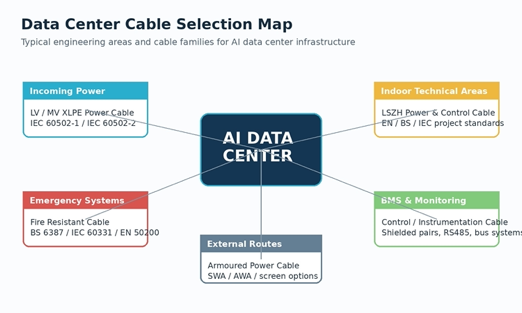
Figure 1. Typical cable families used across AI data center infrastructure.
Traditional data centers already depend on continuous power supply, precise environmental control and reliable communication networks. AI data centers raise these requirements further.
High-performance GPU servers, advanced cooling systems, UPS systems, switchgear, transformers and backup power equipment increase the complexity of the electrical infrastructure. In many projects, the power distribution network must support higher loads, better redundancy and more stable operation.
This means cables used in AI data centers must be selected with attention to voltage rating, current-carrying capacity, fire resistance, flame retardant performance, low smoke and halogen-free properties, mechanical protection, electromagnetic compatibility, installation conditions and compliance with IEC, EN, BS or project-specific standards.
A well-designed cable system helps reduce operational risk and supports the long-term performance of the facility.
Power distribution is one of the most important cable applications in a data center. From incoming power supply to transformers, switchboards, UPS systems, generators and distribution panels, power cables must be selected according to the electrical design and installation conditions.
For low voltage and medium voltage power distribution, IEC 60502 cables are commonly specified in international projects. BURY CABLE’s IEC 60502 cable range covers low voltage and medium voltage power cable solutions for industrial and infrastructure applications.
Typical applications include main power distribution, transformer connections, switchgear connections, UPS and generator systems, mechanical and electrical plant rooms, underground or duct installations and external power supply routes.
Depending on the project design, cables may be supplied with XLPE insulation, PVC or LSZH sheath, steel wire armour, aluminium wire armour, copper tape screen or other construction options. For medium voltage applications, designs such as N2XSY and related IEC 60502-2 cable constructions may be used where metallic screening and suitable outer sheath protection are required.
Fire safety is a key concern in data center design. Even when a data center is protected by advanced fire detection and suppression systems, electrical circuits for emergency systems may need to continue operating during fire conditions.
Fire resistant cables are commonly used for fire alarm systems, emergency lighting, smoke control systems, evacuation systems, emergency communication systems and critical monitoring or control circuits.
Standards such as BS 6387, IEC 60331 and EN 50200 are often referenced for fire resistant cable performance. BURY CABLE supplies fire resistant cable solutions designed for demanding applications where circuit integrity is required under fire conditions.
For data center projects, the fire performance of cables should be reviewed together with the overall fire safety strategy, local regulations and consultant specifications.
In enclosed technical buildings, smoke and toxic gas emissions are important safety considerations. This is why LSZH - Low Smoke Zero Halogen - cables are widely specified in modern infrastructure and building projects.
Compared with standard PVC sheathed cables, LSZH cables are designed to reduce smoke density and corrosive halogen gas emission during fire. This can help improve visibility, reduce equipment damage and support safer evacuation in emergency conditions.
For European data center projects, cable selection may also need to consider CPR requirements, EN standards and local building regulations. While the exact cable class depends on the project specification, LSZH construction is often preferred for indoor power, control, fire alarm and communication cable routes.
Typical LSZH cable applications in data centers include indoor power distribution, technical rooms, control panels, fire alarm circuits, building management systems, cable trays, risers and enclosed equipment areas.
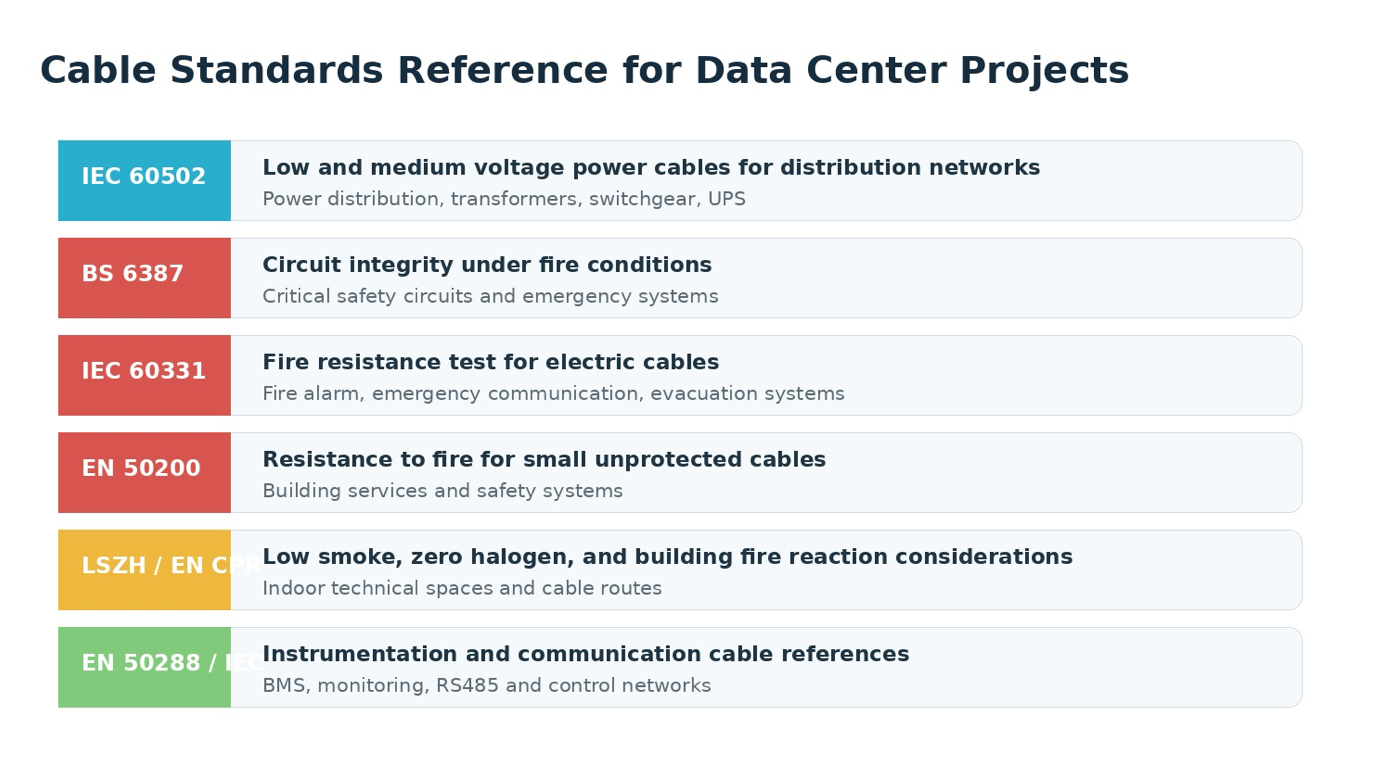
Figure 2. Common standard references for power, fire safety and communication cable selection.
AI data centers rely not only on power cables, but also on a large number of control, instrumentation and communication cables.
These cables support building management systems, temperature and humidity monitoring, access control, security systems, fire detection, generator control, UPS monitoring, automation systems and RS485 or bus communication networks.
For these applications, cable design may need to consider shielding, twisting, impedance, capacitance, signal integrity and electromagnetic interference. In technical environments with high electrical loads, proper screening and installation separation are important to maintain stable signal transmission.
BURY CABLE’s product range includes instrumentation cables, fire resistant cables, railway cables and standard cables for international engineering applications. These cable families can be adapted to different project specifications, installation environments and standard requirements.
Voltage and current rating: The cable must be selected according to the designed load, voltage level, installation method and derating conditions.
Fire performance: Critical safety circuits may require fire resistant cables tested according to BS 6387, IEC 60331, EN 50200 or other applicable standards.
Smoke and halogen emission: For indoor and enclosed areas, LSZH cables are often preferred to reduce smoke and corrosive gas emission during fire.
Mechanical protection: For underground, outdoor or heavy-duty installations, armoured cables may be required to provide additional mechanical protection.
Electromagnetic compatibility: For control, instrumentation and communication systems, screened or shielded cables may be required to reduce interference.
Standard compliance: Cable construction should be reviewed against IEC, EN, BS or project-specific standards before procurement.
Long-term availability: Large data center projects often require phased delivery, documentation support and consistent cable quality across multiple batches.
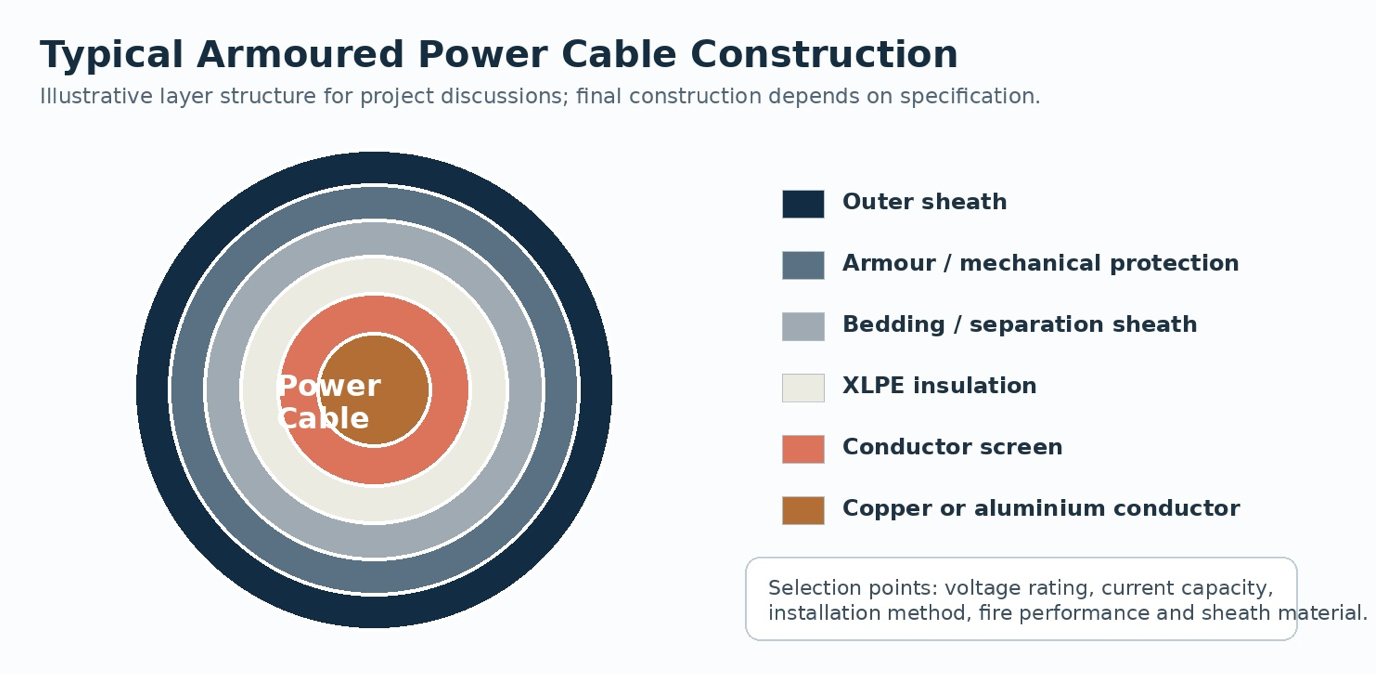
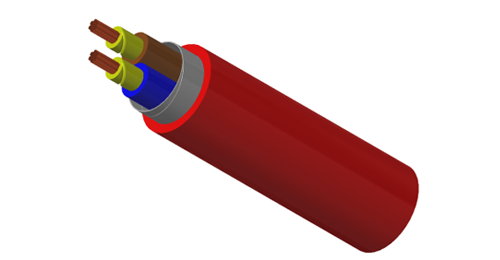
Figure 3. Illustrative power cable construction for technical discussions.
The following table provides a general reference for cable selection in data center infrastructure. Final cable selection should always be based on project specification, installation method, ambient temperature, voltage level, fire performance requirement and local regulatory conditions.
Application Area | Recommended Cable Type | Common Standard Reference |
Main power distribution | LV / MV XLPE power cable | IEC 60502-1 / IEC 60502-2 |
Transformer and switchgear connection | Armoured or screened power cable | IEC 60502 |
UPS and generator systems | Power cable with suitable voltage and current rating | IEC / BS / EN project standards |
Fire alarm and emergency systems | Fire resistant cable | BS 6387 / IEC 60331 / EN 50200 |
Indoor building wiring | LSZH power or control cable | EN / BS / IEC standards |
Building management system | Control and instrumentation cable | EN 50288 / IEC standards |
Data and communication systems | LAN, bus or communication cable | ISO/IEC / EN standards |
External or underground routes | Armoured power cable | IEC 60502 / project specification |
BURY CABLE provides cable solutions for power, fire safety, control, instrumentation and communication applications in international engineering projects.
For data center infrastructure, our cable solutions may include IEC 60502 low voltage and medium voltage power cables, armoured power cables, LSZH power and control cables, fire resistant cables, instrumentation cables, control cables, RS485 and bus communication cables and project-specific cable designs according to IEC, BS and EN standards.
With experience in industrial, infrastructure and building service applications, BURY CABLE supports customers with technical review, cable selection and project-based supply solutions.