BURY CABLE
Power Cable Selection for AI Data Centers:
MV, LSZH and Fire-Resistant Cable Solutions
Technical SEO Article | Data Center Power Infrastructure
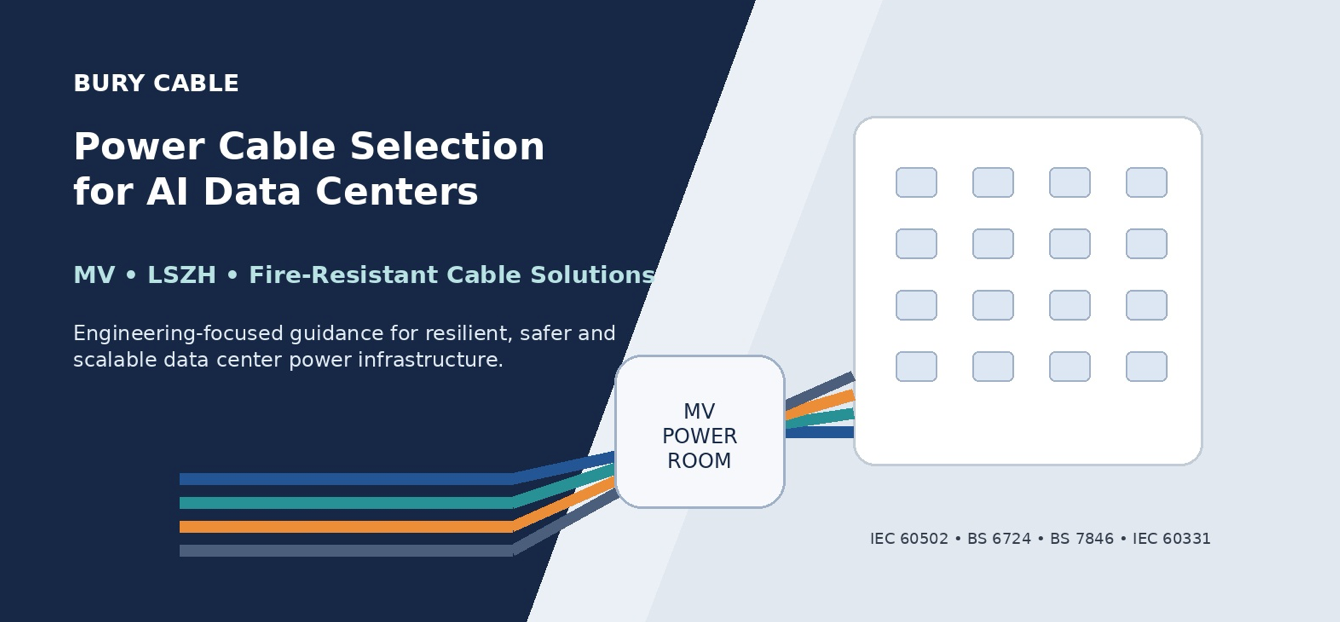
Figure 1. Cable selection should follow the complete data center power path, from MV supply to critical safety systems.
Power Cable Selection for AI Data Centers: MV, LSZH and Fire-Resistant Cable Solutions
AI data centers are changing the way electrical infrastructure is planned. Higher rack densities, larger campuses and shorter deployment timelines place more pressure on every part of the power chain. Cables are no longer just items in a bill of materials; they are part of the reliability, safety and maintainability strategy of the facility.
For consultants, contractors and procurement teams, the cable package should be specified according to voltage level, installation route, fire performance and documentation requirements. A clear specification reduces redesign work and supports faster project approval.
AI workloads increase power density and place heavier demands on utility connections, substations, transformers, UPS systems, cooling equipment and emergency systems. The cable schedule should therefore be part of the electrical design, not a late-stage purchasing list.
Before requesting a quotation, the project team should confirm:
· Voltage level and system design at each part of the power path.
· Installation environment: indoor, outdoor, buried, duct, tray, riser or tunnel.
· Required fire behaviour: flame retardant, LSZH or fire-resistant.
· Applicable standard, consultant specification and approval documents.
A data center power path normally starts at the utility interface, then passes through MV switchgear, transformers, LV distribution, UPS rooms and final equipment supply. Fire pumps, emergency lighting, alarm systems and smoke extraction may require separate cable criteria.
Because the architecture is layered, one cable type cannot cover the whole project. MV power cables, LV armoured cables, LSZH building cables, fire-resistant cables and instrumentation cables each have a different role.
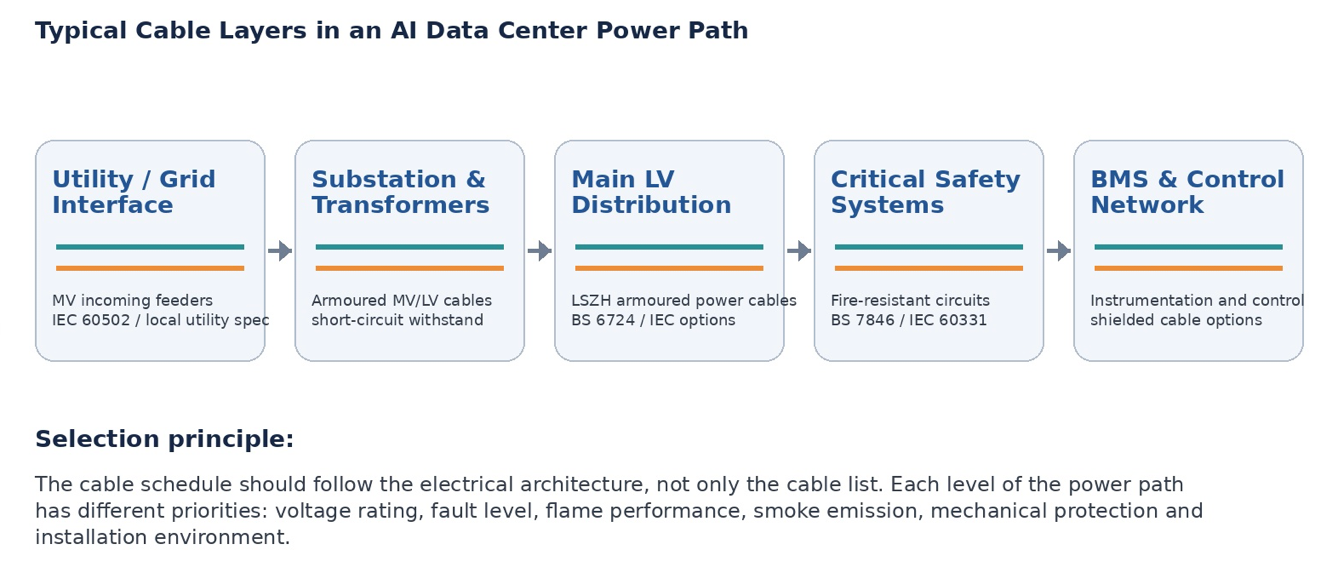
Figure 2. Typical cable layers in an AI data center power path.
Medium-voltage cables are commonly used for incoming feeders, substations, transformers, generator connections and main switchgear. For large data center campuses, IEC 60502-based MV cables may be considered for voltage levels such as 6/10 kV, 8.7/15 kV, 12/20 kV or 18/30 kV, depending on the local grid and project design.
Key points include conductor material, single-core or three-core construction, insulation, metallic screen, armour, short-circuit rating, sheath and installation method. For outdoor or buried routes, moisture, UV and mechanical protection should also be reviewed.
Low-smoke zero-halogen cables are important in enclosed areas where smoke density and corrosive gases must be reduced during a fire. In data centers, this may include risers, plant rooms, technical corridors and indoor tray systems.
BS 6724 is commonly associated with armoured LV power cables using thermosetting insulation and LSZH sheathing. It offers electrical performance, mechanical protection and improved fire reaction compared with standard PVC-sheathed cables. Specifying LSZH early helps avoid approval issues later.
Fire-resistant cables are selected where circuit integrity must be maintained under fire conditions. Typical applications include fire alarm systems, emergency lighting, smoke extraction, fire pumps, public address systems and essential control circuits.
BS 7846, BS 6387 and IEC 60331 are often referenced for fire-resistant cable performance, depending on the project location and specification route. Fire resistance should not be confused with flame retardance. Flame-retardant cables limit flame spread; fire-resistant cables are intended to keep essential circuits operating during fire exposure.
AI data centers depend on building management systems, power monitoring, generator controls, UPS communication, sensors and access control. These circuits may require control cables, screened instrumentation cables or communication cables, with shielding and segregation where routes run near power equipment.
Application Area | Recommended Cable Direction | Typical Reference | Key Priority |
Utility incoming / campus MV distribution | MV power cable, copper or aluminium, single-core or three-core | IEC 60502 / utility specification | Voltage rating, short-circuit withstand, sheath and installation method |
Transformer to LV switchboard | LV power cable, armoured or unarmoured according to route | IEC 60502-1 / local standard | Current rating, voltage drop, fault level and protection |
Indoor LV distribution and risers | LSZH armoured power cable | BS 6724 or equivalent | Low smoke, zero halogen and mechanical protection |
Emergency and life-safety circuits | Fire-resistant power/control cable | BS 7846, BS 6387, IEC 60331 | Circuit integrity, approval evidence and installation compliance |
BMS and monitoring systems | Screened control or instrumentation cable | Project control cable specification | Signal stability, shielding and identification |
Outdoor or buried routes | Armoured cable with suitable outer sheath | IEC 60502 / BS specification | Moisture, UV, soil condition and mechanical protection |
Standard | Common Cable Area | What It Defines | Data Center Relevance |
IEC 60502 | Extruded insulated power cables | Voltage rating, insulation and construction | MV/LV campus and building power distribution |
BS 6724 | LSZH armoured LV power cables | Thermosetting insulation, armour and LSZH sheath | Indoor distribution where smoke and halogen emissions matter |
BS 7846 | Fire-resistant armoured cables | Construction and fire-resistant performance | Critical safety circuits requiring circuit integrity |
BS 6387 | Fire performance test reference | Fire, water and mechanical shock resistance | Enhanced fire survival requirements |
IEC 60331 | Circuit integrity under fire | Fire resistance test method | Emergency and safety circuits |
IEC 60332 | Flame propagation testing | Flame spread behaviour | General fire reaction requirement |
Item | Detail to Provide | Why It Matters |
Voltage rating | 0.6/1 kV, 6/10 kV, 12/20 kV or project requirement | Defines insulation level and cable category |
Conductor | Copper or aluminium; Class 2 or flexible if required | Affects current capacity, voltage drop and cost |
Core arrangement | Single-core, three-core, four-core, multicore or pairs | Determines construction and installation planning |
Insulation / sheath | XLPE, PVC, LSZH, PE or special compound | Affects temperature rating, smoke emission and durability |
Armour | SWA, AWA, STA or unarmoured | Provides protection and affects single-core design |
Fire performance | Flame retardant, LSZH or fire-resistant | Aligns with safety and approval requirements |
Installation method | Buried, duct, tray, ladder, indoor, outdoor or riser | Influences rating, sheath and mechanical protection |
Documents | Datasheet, test report, compliance statement and packing list | Supports consultant approval and procurement control |
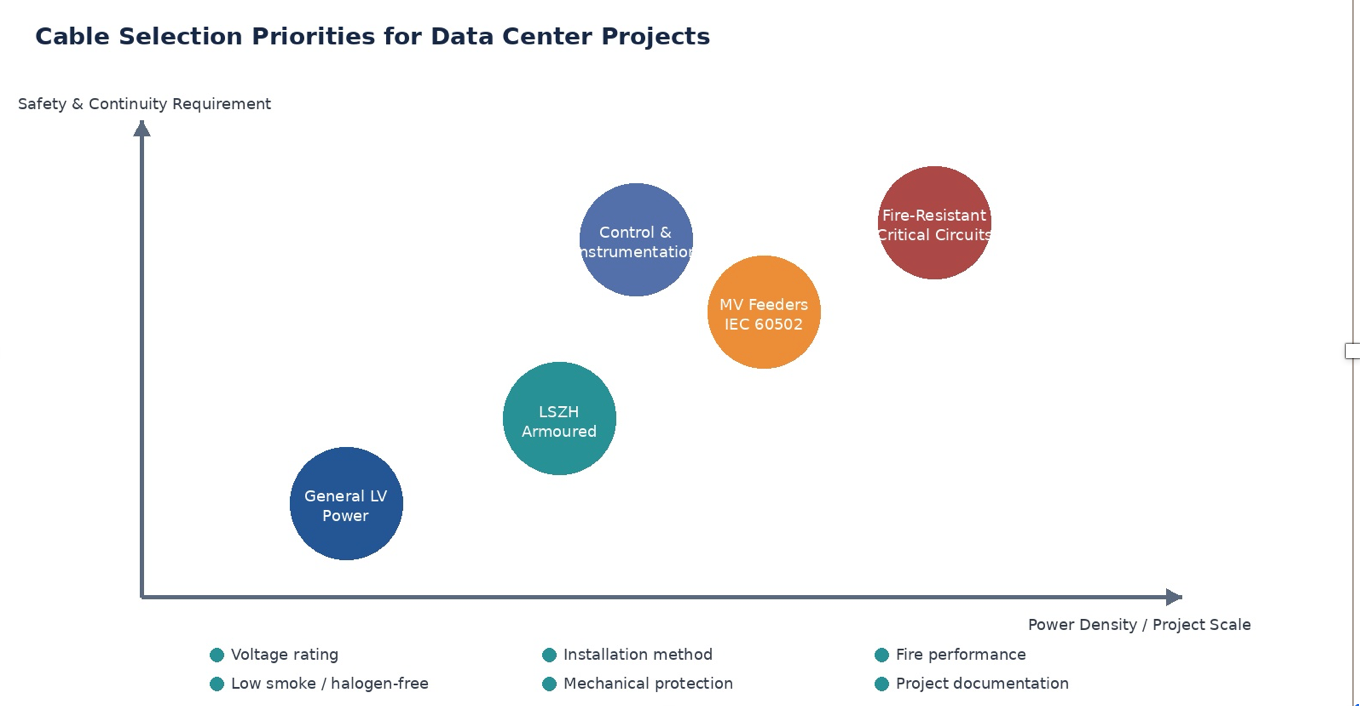
Figure 3. Cable priorities increase as project scale, power density and safety requirements rise.
Do not select only by conductor size. Sheath, armour, fire performance and route conditions can be just as important as cross-sectional area.
Do not treat LSZH and fire resistance as the same requirement. LSZH reduces smoke and halogen emissions; fire-resistant cables keep essential circuits operating during fire exposure.
Do not leave documentation until the final stage. Datasheets, test references and compliance records should be prepared early.
BURY CABLE provides project-oriented cable solutions for power, data and communication applications. For data center packages, we help buyers organize the cable schedule by standard, route, fire performance and documentation needs.
Typical support includes MV/LV power cables, armoured and unarmoured options, LSZH cables, fire-resistant cables, and control or instrumentation cables. Buyers can send a BOQ, cable list, single-line diagram or specification section for review.
AI data centers require resilient, safe and scalable electrical infrastructure. MV power cables support main distribution, LSZH armoured cables improve safety in enclosed routes, and fire-resistant cables help maintain essential circuits under fire.
By matching cable type with voltage level, installation method, fire performance and documentation, project teams can build a clearer and more reliable cable package.