In modern buildings and critical infrastructure, emergency power systems are the backbone of life-safety operations during a fire. When normal power fails, these systems must continue to operate under extreme heat, flame exposure, and mechanical stress.
This is where fire resistant cables play a decisive role.
Fire resistant cables are specifically designed to maintain circuit integrity during fire conditions, ensuring uninterrupted power supply to essential systems when it matters most.
During a fire, power interruption can be just as dangerous as the flames themselves. Emergency power systems rely on robust cabling to keep critical equipment running, including:
Emergency lighting
Fire pumps
Smoke extraction and ventilation systems
Emergency elevators
Control and signaling circuits
Standard power cables may fail within minutes under high temperatures. In contrast, fire resistant cables are engineered to continue operating for a defined period, allowing occupants to evacuate safely and emergency teams to respond effectively.
To function reliably in fire conditions, emergency power cables must meet several critical requirements:
The primary function of a fire resistant cable is to maintain electrical continuity during a fire. Even when exposed to direct flame, the cable must continue transmitting power without short circuits or signal loss.
Fire resistant cables are designed to withstand high temperatures, often exceeding 750°C to 950°C, for extended periods. This ensures system operation throughout the evacuation and firefighting process.
In emergency situations, visibility and air quality are vital. Many fire resistant cables are manufactured with low smoke, zero halogen (LSZH) materials to minimize toxic gas release and smoke density.
Emergency power systems may be subject to vibration, falling debris, or mechanical shock during a fire. Fire resistant cables are built to maintain performance even under these conditions.
Compliance with recognized international standards is essential when selecting cables for emergency power systems. Commonly applied standards include:
C: Resistance to fire
W: Resistance to water (firefighting conditions)
Z: Resistance to mechanical shock
BS 6387 CWZ cables are widely used in emergency power applications where fire, water spray, and mechanical impact may occur simultaneously.
This standard verifies a cable’s ability to maintain circuit integrity during fire exposure for a specified duration.
Defines flame propagation characteristics, ensuring the cable does not contribute to fire spread.
Fire resistant cables are commonly used in the following emergency power systems:
Ensures visibility along evacuation routes, stairwells, and exits when normal lighting fails.
Maintains power to fire pumps, guaranteeing adequate water pressure for firefighting operations.
Supports smoke extraction fans and pressurization systems to keep escape routes clear.
Provides reliable power to designated fire or evacuation elevators during emergencies.
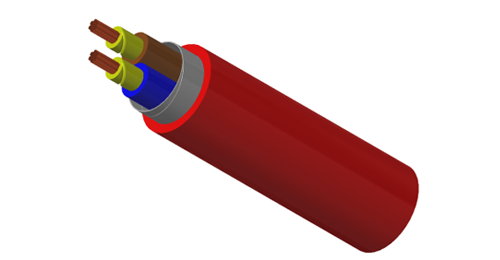
High-quality fire resistant cables typically include:
Copper conductors for stable electrical performance
Mica tape insulation to preserve circuit integrity under fire
Fire resistant inner sheaths for additional thermal protection
LSZH outer sheaths for improved safety in enclosed spaces
These design elements work together to ensure long-term reliability and compliance with safety regulations.
Proper installation is just as important as cable selection. When deploying fire resistant cables for emergency power systems, consider:
Correct routing along fire-rated pathways
Secure fixing to prevent collapse during fire
Separation from non-fire-rated cables
Compliance with local electrical and fire codes
Professional installation ensures the cable’s fire resistance performance is fully realized in real-world conditions.
Our
fire resistant cables
are engineered to meet the demanding requirements of emergency power applications. They offer:
Proven fire survival performance
Compliance with BS 6387 CWZ and IEC standards
Low smoke and halogen-free designs
Reliable operation in critical life-safety systems
Whether for high-rise buildings, public infrastructure, or industrial facilities, our solutions deliver dependable performance when safety is non-negotiable.
Emergency power systems are only as reliable as the cables that support them. By choosing high-quality fire resistant cables, engineers and contractors can ensure uninterrupted power supply during fire emergencies, safeguarding lives and property.
Selecting the right cable is not just a technical decision—it is a critical safety investment.