In modern industrial automation, seamless and reliable communication is essential for operational efficiency, safety, and process control. PROFIBUS cable, one of the world’s most widely adopted fieldbus technologies, delivers robust, high-speed data exchange between controllers, PLCs, sensors, actuators, and distributed I/O devices. This guide provides a deep-dive into PROFIBUS fundamentals, cable construction, system benefits, installation best practices, and future technological trends—designed for engineers, integrators, and automation professionals seeking optimal communication performance.
PROFIBUS (Process Field Bus) is an open, vendor-independent industrial communication protocol developed to support deterministic, real-time data exchange. As industries evolve toward digitalization and smart automation, PROFIBUS remains a cornerstone technology for process control and discrete manufacturing applications.
Unified communication for PLCs, sensors, drives, and field devices
High-speed, deterministic data exchange
Reliable operation in electrically noisy and harsh industrial environments
Large, scalable network topologies supporting complex automation systems
PROFIBUS has become a universal standard across factories, process plants, robotics systems, and transportation infrastructure.
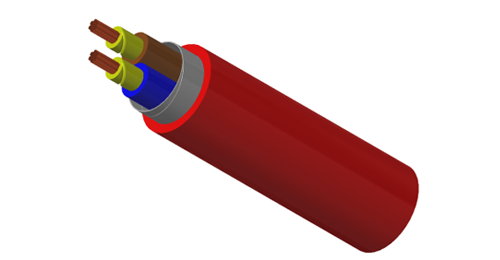
PROFIBUS cables are engineered to transmit high-speed signals with minimal electromagnetic distortion, even in heavy industrial environments. The cable design follows rigorous specifications to ensure consistent performance over long distances.
Shielded construction protects against EMI and RFI from motors, inverters, and high-voltage systems.
A 150 Ω characteristic impedance ensures stable digital communication with minimal signal loss.
PROFIBUS cables are rated for chemical resistance, abrasion, temperature stability, and vibration tolerance.
Reduced wiring complexity via bus architecture instead of point-to-point connections
Interoperability with hundreds of device manufacturers worldwide
Lower installation and commissioning costs
Advanced diagnostics for predictive maintenance
Real-time response and deterministic performance
PROFIBUS remains one of the most cost-efficient and reliable fieldbus systems in industrial automation.
Used in factory automation for high-speed communication (up to 12 Mbps) between PLCs and field devices.
Designed for hazardous and process industry environments such as oil & gas, chemicals, and water treatment. Supports intrinsic safety and slower speed communication for long-distance runs.
Combine data transmission and auxiliary power in a single cable—ideal for robots, conveyors, and compact machinery.
Maintain proper cable separation from power cables
Ground the cable shield at both ends
Avoid tight bends and mechanical stress
Use certified PROFIBUS connectors and terminators
Install 220 Ω bus termination at both ends of the segment
Following manufacturer guidelines ensures stable communication and extends network lifespan.
Check for incorrect termination or missing resistors
Verify shielding and grounding continuity
Inspect connectors for poor crimps or loose contacts
Monitor signal quality using PROFIBUS diagnostic tools
Most communication faults come from cabling errors rather than device malfunction.
PROFINET — Ethernet-based, higher speed, integrates well with IT networks
Modbus — Simple and inexpensive but slower and less deterministic
EtherCAT — Ultra-fast, ideal for robotics and motion control
Integration with IIoT and Industry 4.0 platforms
Hybrid PROFIBUS + PROFINET architectures
Advanced cybersecurity features
Smarter diagnostic capabilities
Despite the rise of Ethernet-based systems, PROFIBUS continues to evolve and remains a key technology in industrial modernization.
PROFIBUS cables play a vital role in high-performance automation networks, enabling reliable, fast, and deterministic communication. By understanding cable types, installation methods, diagnostic tools, and modernization trends, industrial engineers can design highly efficient systems that deliver long-term performance and operational excellence.