In today's fast-paced industrial landscape, the effectiveness of your operations often hinges on the quality of your connectivity solutions. One key component that frequently gets overlooked is the SCADA cable. These essential conduits facilitate real-time data transfer between assets, ensuring that your systems function seamlessly. Whether you're monitoring a remote pipeline or controlling a factory floor, the right SCADA cable can make all the difference in efficiency and reliability.
Choosing the right cable requires an understanding of various factors, including environmental conditions and signal integrity. With so many options on the market, it can be overwhelming to determine which SCADA cables best suit your specific industrial needs. In this article, we’ll break down everything you need to know about SCADA cables, from types and specifications to installation tips, empowering you to make informed decisions that enhance your operation’s performance. Join us as we navigate the intricate world of SCADA cables and unlock the potential for improved connectivity in your business.
SCADA (Supervisory Control and Data Acquisition) systems are essential in modern industries, where they monitor and control equipment to ensure efficient operations. SCADA cables play a critical role in these systems by transmitting data between sensors, controllers, and other devices. These cables enable real-time data flow, which is crucial for timely decision-making and maintaining optimal performance across industrial processes. Without reliable SCADA cables, the entire system's functionality could be compromised, leading to inefficiencies, downtime, and potential safety hazards.
The primary purpose of SCADA cables is to provide a robust and reliable communication pathway. These cables are designed to withstand harsh industrial environments, including exposure to chemicals, extreme temperatures, and physical stress. By ensuring signal integrity and minimizing electromagnetic interference (EMI), SCADA cables help maintain the accuracy and reliability of data transmission. This, in turn, supports the overall efficiency of the SCADA system, enabling operators to monitor and control equipment with precision.
Understanding the importance of SCADA cables goes beyond recognizing their role in data transmission. It's also about acknowledging their impact on the entire industrial process. By choosing the right SCADA cables, businesses can enhance their operational efficiency, reduce maintenance costs, and improve safety standards. As industries continue to evolve and adopt more advanced technologies, the demand for high-quality SCADA cables will only increase. Hence, it's crucial to stay informed about the latest developments and best practices in SCADA cable selection and installation.
SCADA cables come in various types, each designed to meet specific requirements and conditions. The most common types include twisted pair cables, coaxial cables, and fiber optic cables.
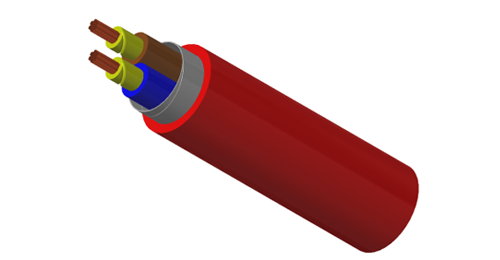
Twisted pair cables are widely used due to their simplicity and cost-effectiveness. They consist of pairs of insulated wires twisted together to reduce electromagnetic interference. These cables are suitable for short to medium-distance communication and are often used in less demanding environments.
Coaxial cables offer better protection against electromagnetic interference due to their layered design. These cables consist of a central conductor, an insulating layer, a metallic shield, and an outer insulating layer. Coaxial cables are ideal for medium to long-distance communication and are commonly used in environments with high levels of EMI. They provide higher data transmission rates and improved signal integrity compared to twisted pair cables.
Fiber optic cables represent the pinnacle of data transmission technology. These cables use light signals to transmit data, offering unmatched speed and bandwidth capabilities. Fiber optic cables are immune to EMI, making them suitable for the most demanding industrial environments. They can transmit data over long distances without signal degradation, making them ideal for large-scale SCADA systems. However, they are more expensive and require specialized equipment for installation and maintenance.
Selecting the right SCADA cable involves considering various factors to ensure it meets your specific industrial needs.
Environmental conditions: Chemicals, temperature extremes, moisture, vibration.
Transmission distance: Twisted pair for short; coaxial/fiber for long distances.
Signal integrity and bandwidth: Real-time data requires stable, high-resolution transmission.
Installation and maintenance complexity: Some cables require specialized handling or tools.
Cable specifications determine performance, durability, and compatibility.
Copper is preferred for superior conductivity. Aluminum is lighter and less expensive but lower-performing.
PVC, PE, and Teflon offer varying levels of chemical resistance, flexibility, and temperature tolerance.
Foil shields, braided shields, or hybrid shielding protect against EMI and ensure signal reliability.
Oil & Gas: Remote monitoring, leak detection, pipeline control.
Manufacturing: Automation control, sensors, machine networking.
Water/Wastewater: Pump control, treatment plant automation, remote telemetry.
Perform a site assessment before installation
Maintain recommended bend radius
Use correct connectors and grounding
Separate from high-voltage power cables
Conduct verification tests after installation
Perform periodic inspections for wear and corrosion
Clean connectors regularly
Avoid overstressing cables or exceeding environmental limits
Use protective conduits where necessary
Smart cables: Built-in sensors for condition monitoring.
Greater shift toward fiber optic: Faster, cleaner, long-distance data transmission.
Hybrid wired + wireless SCADA integration.