When selecting a DVI cable for industrial displays, control systems, or specialized equipment, understanding the difference between DVI digital and DVI analog cable is essential. While both are based on the DVI interface family, they are designed for different signal types and application requirements.
In many projects, choosing the wrong cable can lead to compatibility issues, unstable display performance, or unnecessary integration problems. For OEMs, system integrators, and industrial buyers, the choice between DVI digital and DVI analog cable should be based on signal format, equipment interface, transmission requirements, and the operating environment.
In this guide, we explain the real difference between DVI digital and DVI analog cable, how each type works, where they are used, and how to select the right cable for your application.
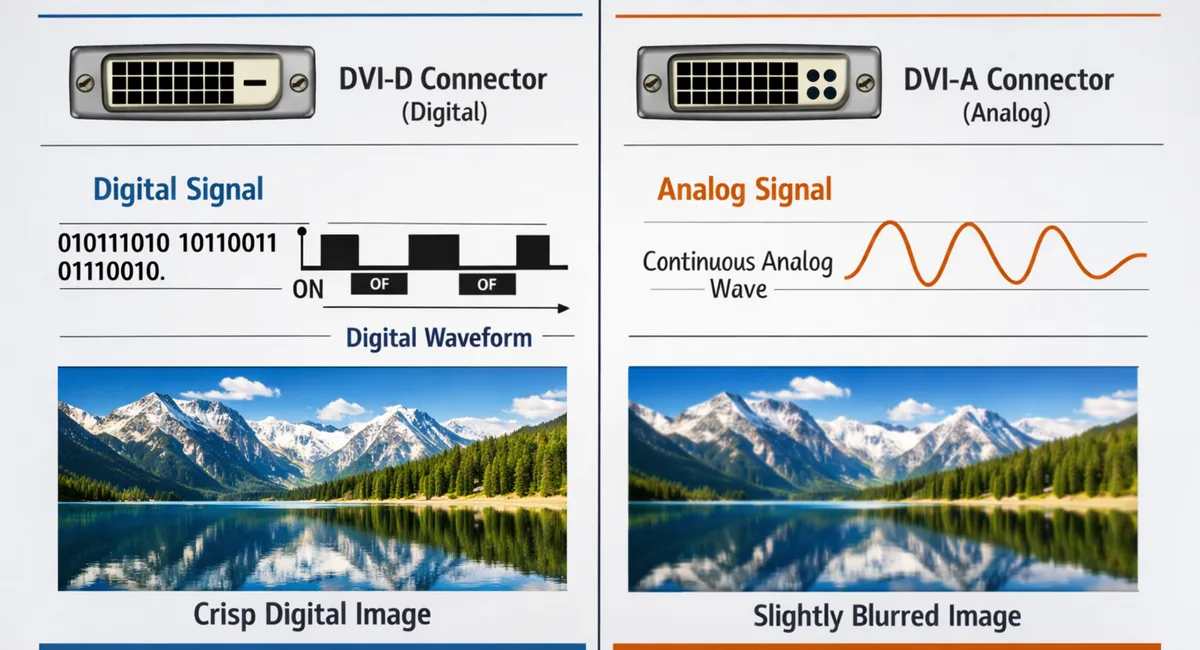
DVI digital cable transmits digital video signals only.
DVI analog cable transmits analog video signals only.
Choosing the correct cable depends on device interface, signal type, and system compatibility.
In industrial applications, shielding, durability, and customized construction are also important factors.
A DVI digital cable is designed to transmit digital video signals only. It is commonly associated with DVI-D connections and is widely used in digital display systems where the source and display both operate in digital format.
Digital transmission helps preserve signal integrity and provides clearer, more stable image output in compatible systems. In industrial environments, DVI digital cable is often used for:
Industrial monitors
Control panels
HMI systems
Automation displays
Digital video interfaces in machinery
Where digital signal compatibility is available, DVI digital cable is often the preferred choice because it supports direct digital video communication between devices. For project-specific requirements, a DVI Digital Single Link Cable may be a suitable option.
A DVI analog cable is designed to transmit analog video signals only. It is typically associated with DVI-A connections and is mainly used in legacy systems or equipment that still depends on analog signal transmission.
Although analog-based DVI applications are less common in modern installations, they are still relevant in some industrial, transitional, or older equipment environments. DVI analog cable may still be used in:
Legacy control systems
Older display equipment
Specialized analog interface systems
Retrofit projects involving older hardware
For systems that require analog compatibility, using the correct DVI Analog Cable is necessary to ensure proper signal transmission and equipment matching.
The most important difference is the type of video signal being transmitted.
| Cable Type | Signal Type | Typical Interface | Best Suited For |
|---|---|---|---|
| DVI Digital Cable | Digital video only | DVI-D | Modern digital display systems |
| DVI Analog Cable | Analog video only | DVI-A | Legacy and analog-based systems |
This means the cable itself is not simply a different physical form. It is designed to support a different signal standard, and that directly affects compatibility.
For buyers and engineers, the digital vs analog distinction is not just a technical detail. It determines whether the cable will work correctly in the system.
Important: Cable selection should always start with confirming the actual interface and signal type, not just the connector shape.
If the equipment uses a digital output and a digital display input, a DVI digital cable is typically the right choice. If the system uses analog-compatible hardware, a DVI analog cable may still be required.
Selecting the wrong cable can result in:
No image output
Signal mismatch
Connector compatibility problems
Unstable transmission
Time lost during installation and commissioning
That is why cable selection should always begin with interface confirmation, not just connector appearance.
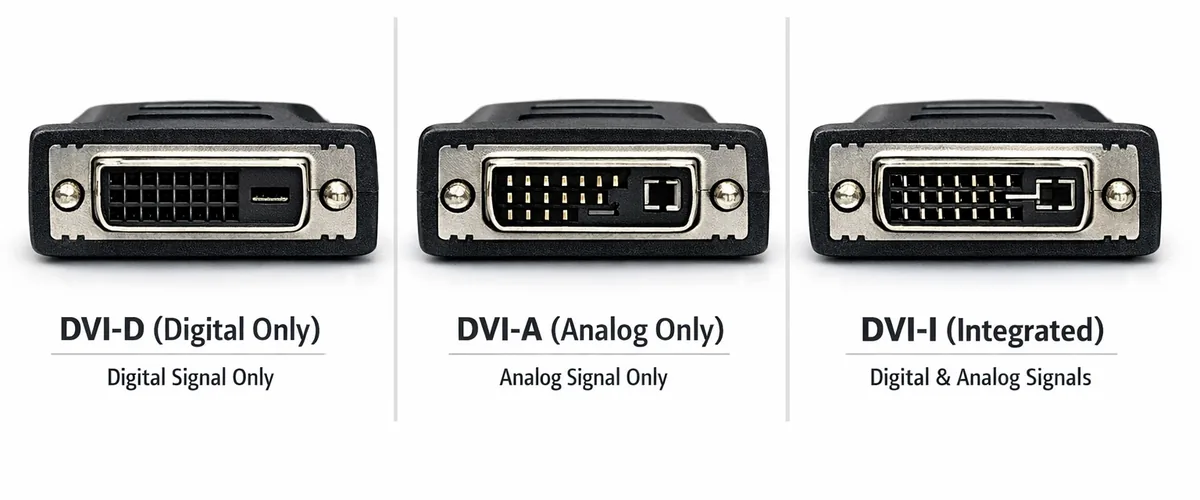
To better understand DVI digital vs DVI analog cable, it is useful to look at the main DVI interface categories.
DVI-D supports digital signals only. It is the standard choice for purely digital video transmission.
DVI-A supports analog signals only. It is mainly found in older or specialized systems.
DVI-I can support both digital and analog signals, depending on the connected equipment and cable configuration. DVI-I is often used when compatibility flexibility is required. However, this does not mean every DVI cable can automatically handle both signal types. The actual cable and device interface must still match the application.
In many cases, digital transmission is preferred because it provides more stable and consistent image quality when used in a compatible system.
A DVI digital cable generally offers:
Clearer digital signal transfer
Better compatibility with modern digital displays
Reduced risk of signal degradation caused by analog conversion
A DVI analog cable, on the other hand, may still be appropriate where the equipment itself is analog-based. In that case, analog transmission is not necessarily “wrong” — it is simply the required signal format for that system.
The best choice depends on the actual device interface, not on whether one technology sounds newer.
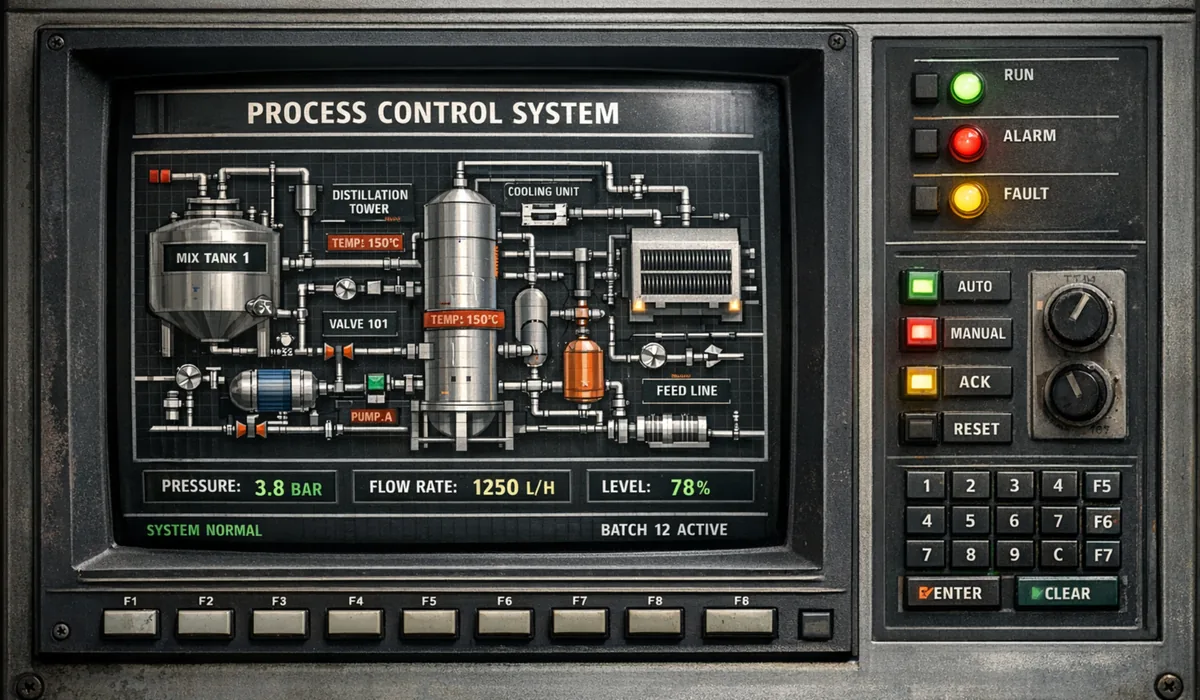
DVI digital cable is commonly used in modern or semi-modern industrial video systems, especially where direct digital signal transfer is required.
Common applications include:
Industrial display terminals
Operator panels
Machine vision display systems
Automation control interfaces
Equipment with digital video output
In these applications, digital transmission helps improve reliability and maintain image clarity. Many broader Industrial Cables solutions are also selected based on shielding, durability, and environment-specific performance.
DVI analog cable is more likely to appear in projects involving compatibility with older equipment.
Typical applications include:
Legacy industrial monitors
Older control cabinets
Retrofit systems
Transitional system upgrades
Equipment that still relies on analog video architecture
Although its use is less common than before, DVI analog cable remains important where system replacement is not practical or where equipment continuity is required.
Choosing the right cable starts with the actual system requirement.
Confirm whether the connected devices use DVI-D, DVI-A, or DVI-I. Do not assume the cable type based only on appearance.
Determine whether the system transmits digital video or analog video. This is the most important selection factor.
Modern equipment is more likely to require digital transmission. Older equipment may still rely on analog compatibility.
If the cable is used in industrial, transport, or automation environments, cable construction also matters. Shielding, jacket material, flexibility, and mechanical performance may be just as important as signal format.
In many industrial projects, a standard cable may not be enough. Custom cable design may be needed for additional shielding, special jacket materials, integrated conductors, or higher durability in harsh environments.
In industrial systems, digital transmission is often preferred where supported by the equipment. A suitable DVI digital cable can provide reliable signal quality and better consistency in environments where stable display performance is required. For example, industrial displays, automation equipment, and control systems may benefit from a cable designed for digital signal transmission together with proper shielding and robust mechanical construction.
DVI analog cable remains relevant when older systems still need to be maintained. In retrofit projects, replacing the entire system may be more costly than preserving compatibility with the existing analog architecture. In those cases, using the correct DVI analog cable helps maintain system continuity and reduces the risk of interface mismatch.
Yes. In industrial and OEM applications, both digital and analog DVI cable solutions can be customized according to project requirements.
Customization may include:
Cable length
Shielding design
Jacket material
Flame-retardant construction
LSZH options
Flexibility requirements
Additional integrated conductors
Application-specific performance features
This is especially important in machine building, railway systems, control cabinets, and automation projects where standard retail cables may not be sufficient. For transport-related projects, a DVI Rolling Stock Cable or other Railway Cables may be considered depending on application requirements.
The real difference between DVI digital and DVI analog cable lies in the signal format they are designed to transmit. DVI digital cable is used for digital video systems, while DVI analog cable is used for analog-compatible systems, especially in older or legacy applications.
For industrial buyers and engineers, the correct choice depends on interface compatibility, signal type, equipment age, and application requirements. In demanding environments, cable construction quality and customization are also key factors.
Before selecting a cable, always confirm the actual device interface and signal type. A correct match will help ensure reliable performance, easier integration, and better long-term system stability.
DVI digital cable carries digital signals only, while DVI analog cable carries analog signals only. The correct choice depends on the device interface and signal type.
Not always. DVI digital is generally preferred for modern digital systems, but DVI analog is still necessary for equipment that relies on analog transmission.
Not unless the system and interface are designed to support it. Cable and interface compatibility must be checked carefully.
Yes. Although less common today, DVI analog cable is still used in legacy systems, retrofit projects, and specialized equipment.
You should first confirm the interface type and signal format of both the source device and the display device. That will determine the correct cable.
Yes. Industrial DVI cables can be customized for shielding, jacket materials, flexibility, flame performance, and other project-specific requirements.
Contact Bury Cable for customized recommendations on DVI digital cable, DVI analog cable, and industrial cable solutions based on your technical application requirements.