DVI composite cables are used where reliable video signal transmission must be combined with robust mechanical performance and application-specific cable design. In industrial environments, these cables are often selected for display systems, control equipment, automation lines, and railway applications where standard consumer-grade cables may not be suitable.
Unlike simple off-the-shelf display leads, a DVI composite cable can be designed as a more integrated cable solution, combining DVI signal transmission with additional structural or functional elements such as shielding, control conductors, power cores, or reinforced jackets. This makes DVI composite cables especially valuable in projects that require stable signal quality, longer service life, and resistance to harsh operating conditions.
In this guide, we explain what DVI composite cables are, how they are structured, the main cable types, and how to choose the right solution for industrial applications.
DVI composite cables combine DVI signal transmission with additional functional elements in one cable structure.
They are commonly used in industrial displays, machine building, automation systems, and railway applications.
Compared with standard retail DVI cables, they can offer stronger shielding, better durability, and more customization options.
For buyers comparing broader cable constructions, related Industrial Cables may also provide useful reference when evaluating application-specific integrated cable designs.
A DVI composite cable is a cable solution built around DVI signal transmission while incorporating multiple cable elements into one overall construction. In industrial cable terminology, “composite” usually refers to a cable that combines different functional components within one cable design, rather than a standard consumer AV “composite video” cable.
A DVI composite cable may include:
DVI signal transmission units
Power conductors
Control pairs
Shielding layers
Drain wires
Mechanical reinforcement
Special outer jackets for flame retardancy, flexibility, or harsh environments
This integrated design helps reduce installation complexity, improve cable management, and enhance reliability in demanding systems.
Important: In this context, “composite cable” refers to a multi-function cable construction. It does not mean a traditional consumer composite video cable.
Although newer interfaces such as HDMI and DisplayPort are widely used in many commercial applications, DVI cables remain relevant in a range of industrial and legacy systems. Many machines, industrial displays, control panels, and specialized equipment still rely on DVI connections for stable video transmission.
DVI composite cables remain useful because they offer:
Reliable digital or analog video transmission
Compatibility with existing equipment
Better integration into custom machine cable assemblies
Stronger mechanical protection than standard retail cables
Customization for industrial, automation, or railway projects
For manufacturers and system integrators, the goal is not simply to connect a screen. It is to ensure consistent signal performance under real working conditions such as vibration, bending, electromagnetic interference, temperature variation, and long operating cycles.
The exact structure depends on the application, but a typical DVI composite cable may include several layers and elements designed for signal integrity and durability.
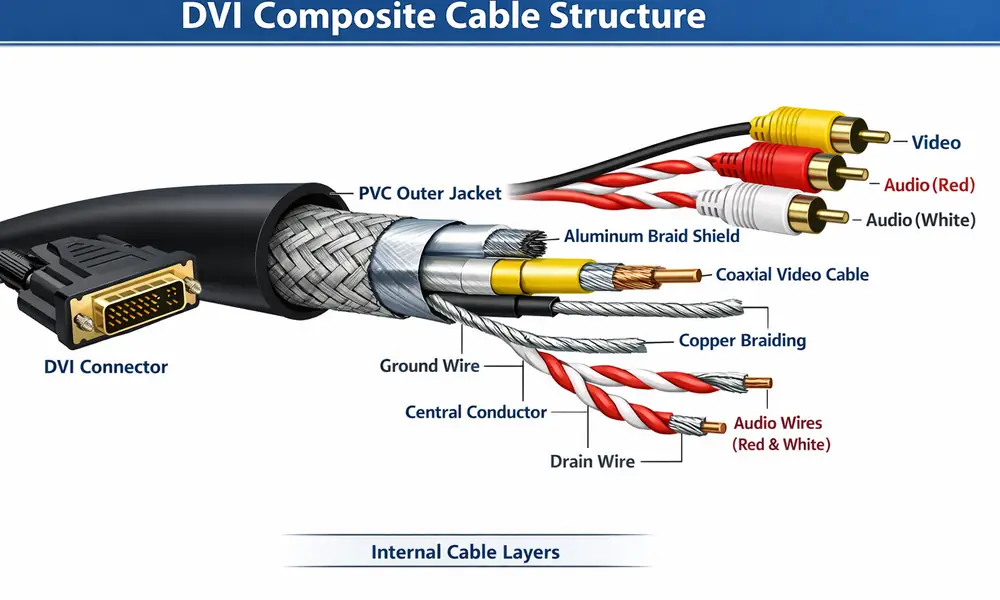
The core of the cable is the DVI signal transmission section. Depending on the cable type, it may include twisted pairs, coaxial elements, or other signal-bearing conductors designed to support digital or analog DVI transmission.
Signal stability is critical. Poor conductor design or inadequate shielding can lead to attenuation, interference, or display problems.
Shielding is one of the most important elements in a DVI composite cable, especially in industrial environments with high electromagnetic interference.
Common shielding methods include:
Aluminum foil shielding
Braided copper shielding
Individual pair shielding
Overall shielding
Combined foil and braid shielding
A well-designed shielded DVI composite cable can help reduce EMI and preserve signal quality over longer distances or in electrically noisy environments.
In some customized cable designs, DVI transmission is combined with:
Power cores
Data pairs
Control conductors
Auxiliary signal lines
This allows one composite cable to handle multiple functions in a machine or system, simplifying routing and installation.
The outer and inner materials are selected according to the use environment. Typical options may include:
PVC
LSZH
PUR
TPE
Special railway-grade compounds
Material choice affects flexibility, flame performance, abrasion resistance, oil resistance, and environmental durability.
For moving equipment, railway vehicles, or harsh field installations, the cable may also require:
Reinforced fillers
Strain-resistant construction
Flexible design for repeated bending
Tough outer sheath
Enhanced crush or abrasion resistance
These features help extend service life in real operating conditions.
To choose the right DVI composite cable, it is important to understand the common DVI interface types.
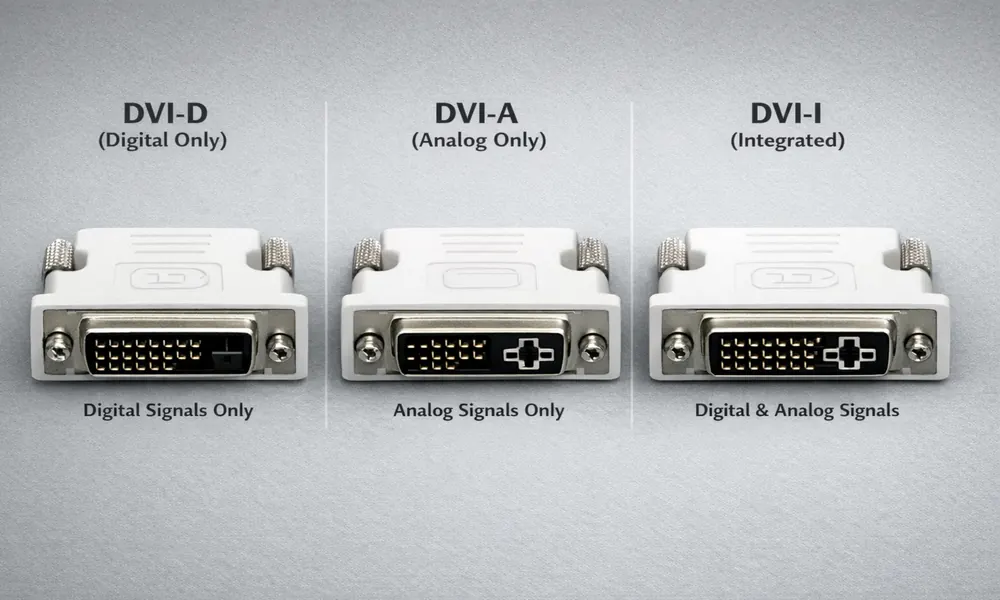
| Type | Signal | Main Use | Typical Application |
|---|---|---|---|
| DVI-D | Digital only | Digital display systems | Industrial monitors, control panels, automation displays |
| DVI-A | Analog only | Legacy analog systems | Older equipment and specific analog video interfaces |
| DVI-I | Digital + Analog | Mixed compatibility systems | Transition projects and equipment with broader interface needs |
DVI-D is used for digital video signals only. It is widely used in digital display applications where analog compatibility is not required.
This is often the preferred choice for modern industrial displays that operate on digital video transmission. For project-specific requirements, a DVI Digital Single Link Cable may be a suitable option.
DVI-A is used for analog signals only. It is less common today but may still be required in legacy systems or specific equipment configurations. In these cases, a dedicated DVI Analog Cable may be required for compatibility.
DVI-I supports both digital and analog signals. It is often selected when compatibility with mixed equipment or transition systems is needed.
For some custom projects, DVI-I can provide added flexibility when system requirements are not fully standardized.
DVI composite cables can also be categorized as single link or dual link.
Single link DVI cables are suitable for lower bandwidth requirements and standard display resolutions.
Dual link DVI cables provide higher bandwidth and are better suited for higher-resolution applications where more signal capacity is required.
When selecting a cable, the system resolution, transmission distance, and interface requirements must all be considered carefully.
DVI composite cables are not limited to office or consumer display use. In industrial settings, they are often part of larger engineered cable systems.
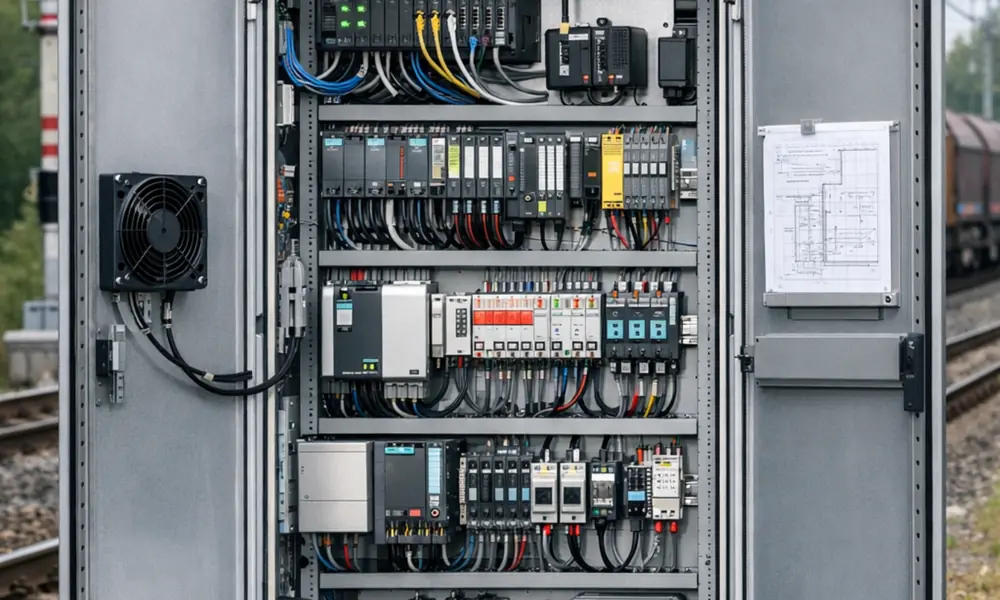
Many industrial monitors, HMIs, and control panels still use DVI interfaces. In such systems, a DVI composite cable can provide stable video transmission together with the rugged design needed for continuous operation.
In automation lines, cable routing is often limited and equipment is exposed to electrical noise, heat, and motion. A custom DVI composite cable can combine video, control, and power functions into one compact cable design.
Machine builders often require custom cable constructions that fit exact equipment layouts. A DVI composite cable can be tailored for connector type, shielding performance, bending requirements, and jacket material.
Railway applications require cables that can withstand vibration, flame performance requirements, and demanding operating environments. DVI composite cable solutions for rolling stock systems may be designed with enhanced safety and durability characteristics. For specialized transport projects, a DVI Rolling Stock Cable or other related Railway Cables may be considered depending on system requirements.
Inside control cabinets or integrated technical systems, DVI composite cables help reduce clutter and improve cable organization by combining several functions into one cable assembly.
Selecting the right DVI composite cable requires more than matching the connector. The cable must fit the system’s electrical, mechanical, and environmental requirements.
First, confirm whether the system needs:
DVI-D
DVI-A
DVI-I
Single link
Dual link
A mismatch here can result in compatibility issues or poor system performance.
Consider where the cable will be used:
Inside equipment
Factory floor
Outdoor enclosure
Mobile machinery
Railway vehicle
The operating environment determines the necessary shielding level, jacket material, and mechanical strength.
In industrial systems, interference can be a serious issue. If the cable runs near motors, drives, transformers, or other electrical equipment, stronger shielding is often essential.
For static installations, a standard industrial construction may be enough. For moving equipment, drag chains, or repeated bending, a more flexible cable design is required.
Some applications require:
Flame-retardant construction
Low smoke zero halogen materials
Railway-compliant materials
Project-specific safety performance
These factors are especially important in public infrastructure, transport systems, and enclosed technical environments.
Many OEMs and project contractors prefer one integrated cable rather than several separate cables. In that case, a customized DVI composite cable can reduce installation time and improve system layout.
A standard DVI cable is usually a finished consumer or commercial cable intended for general-purpose display connection. A DVI composite cable, by contrast, is typically engineered for a more specific application.
Compared with a standard DVI cable, a DVI composite cable may offer:
Better shielding performance
Additional conductors
Improved mechanical strength
Application-specific materials
Greater flexibility in construction
Better suitability for industrial or transport environments
For demanding projects, this difference can have a significant impact on reliability and long-term performance.
Yes. In many industrial and OEM applications, DVI composite cables are customized to match exact project requirements.
Customization may include:
DVI type selection
Conductor design
Shielding configuration
Additional power or control cores
Jacket material
Flame-retardant or LSZH construction
Length and flexibility requirements
Application-specific standards
Custom cable design is especially useful when installation space is limited or when the cable must operate under specific environmental conditions.
For industrial buyers, choosing the right cable supplier is just as important as choosing the cable type. A reliable supplier should be able to support not only product availability, but also engineering selection and customization.
A capable DVI composite cable manufacturer should be able to offer:
Technical support for cable selection
Custom construction options
Stable quality control
Support for industrial and transport applications
Clear understanding of shielding and material requirements
For complex projects, supplier experience can help reduce design errors and improve integration efficiency.
DVI composite cables remain an important solution in industrial display, automation, machine building, and railway systems. By combining DVI signal transmission with shielding, mechanical protection, and additional functional conductors, these cables offer more than a simple display connection.
The right DVI composite cable can improve signal stability, reduce installation complexity, and deliver better long-term performance in demanding environments. Whether the application requires digital transmission, analog compatibility, higher bandwidth, or customized integrated cable construction, understanding the cable structure and application requirements is essential.
If you are selecting a DVI composite cable for industrial use, it is best to evaluate not only the connector type, but also the complete electrical and mechanical environment of the project. In many cases, reviewing related Industrial Cables can also help define the most suitable cable structure for the application.
A DVI composite cable is a cable built around DVI signal transmission while combining other structural or functional elements such as shielding, power conductors, control cores, or reinforced jackets in one cable design.
No. In industrial cable terminology, “composite” usually refers to a multi-function cable structure. It does not mean a traditional consumer composite video cable.
DVI-D carries digital video signals only, while DVI-A carries analog signals only. The correct choice depends on the connected equipment and system requirements.
Single link DVI supports lower bandwidth, while dual link DVI supports higher bandwidth and is typically used for higher-resolution applications.
Yes. DVI composite cables are still widely used in industrial displays, automation equipment, machine systems, and certain railway or legacy applications.
Yes. They can be customized in conductor design, shielding, jacket material, flame performance, flexibility, and additional integrated cores based on project needs.
Looking for a reliable DVI composite cable solution for industrial, automation, or railway applications? Contact Bury Cable for customized cable recommendations based on your technical requirements.