Chemical plants operate in hazardous environments with flammable liquids, toxic chemicals, and high-pressure systems.
Maintaining electrical system integrity during a fire is crucial to prevent accidents and protect personnel.
Key risks include:
Rapid fire propagation due to flammable chemicals
Toxic smoke generation
High-voltage equipment failure impacting critical operations
For these reasons, fire resistant cables are mandatory in process control, emergency systems, and safety circuits.
Fire resistant cables are commonly used for:
Emergency shutdown circuits
Fire alarm and detection systems
Emergency lighting and evacuation signage
Critical power supply to pumps and compressors
Control and instrumentation systems
Failure of these circuits during a fire can halt critical operations and increase hazard risk.
| Feature | Fire Resistant Cables | Flame Retardant Cables |
|---|---|---|
| Maintain circuit integrity during fire | ✔ | ✖ |
| Continue power/signal transmission | ✔ | ✖ |
| Suitable for chemical hazard areas | ✔ | Limited |
| Typical application | Safety & control circuits | General wiring |
Flame retardant cables only limit fire spread, whereas fire resistant cables ensure systems keep running during fire incidents.
BS 6387 CWZ classification includes:
C – Fire resistance at 950°C
W – Fire with water spray
Z – Fire with mechanical shock
Chemical plants may have sprinkler systems, water jets, and mechanical impacts during emergency scenarios.
BS 6387 CWZ cables maintain circuit integrity under these extreme conditions, making them ideal for hazardous chemical environments.
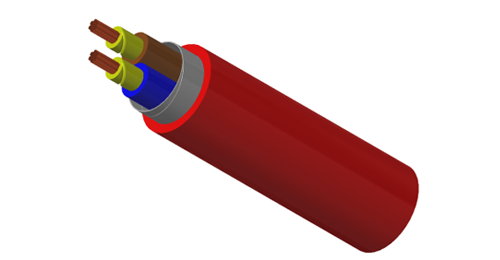
Typical construction includes:
Conductor: Annealed copper
Insulation: Mica tape with XLPE
Inner Sheath: Low Smoke Zero Halogen (LSZH)
Armour (optional): Steel wire for mechanical protection
Outer Sheath: LSZH to reduce smoke and toxic gas
This design ensures both electrical continuity and safety under chemical hazards.
Use fire-rated cable trays and supports
Maintain correct bending radius to prevent insulation damage
Keep separation from reactive chemicals
Ensure compatibility with fire-stopping systems and emergency shutoff mechanisms
Proper installation ensures the cable performs as specified in fire conditions.
Consider:
Compliance with BS 6387 CWZ or equivalent standards
Valid test reports and certifications
Long-term reliability in high-temperature, corrosive environments
Ability to customize specifications for specific plant requirements
Supplier experience in chemical and hazardous facilities
| Item | Description |
|---|---|
| Industry | Chemical / Process Plants |
| Key Systems | Emergency & Control Systems |
| Standard | BS 6387 CWZ |
| Cable Type | Fire Resistant LSZH Cables |
| Typical Service Life | Long-term, high-risk environments |
Q1: Are fire resistant cables mandatory in chemical plants?
Yes, safety regulations often require BS 6387 CWZ cables for emergency and safety circuits.
Q2: Can cables be customized for chemical plant projects?
Yes. Options include conductor size, insulation type, armour, and voltage rating.
Q3: Are BS 6387 CWZ test reports available?
Reputable suppliers provide full test reports and quality documentation upon request.
For chemical plants, BS 6387 CWZ fire resistant cables ensure safety and circuit integrity in hazardous and high-risk areas.
We supply fire resistant cables for process control, emergency systems, and instrumentation in chemical facilities, supporting standard and customized specifications.
→ Request Technical Datasheet & Quotation
Fire resistant cables are also widely used in oil & gas facilities and metro and tunnel projects. Our BS 6387 CWZ fire resistant cables are designed for high-risk industrial applications.